

Cellulitis is a bacterial infection of the skin and the soft tissue just beneath it. It usually shows up as an area that is red or discolored, warm to the touch, swollen and tender, most often on a lower leg.
It is common, and most cases settle with oral antibiotics. What matters is noticing when a case is not behaving like a straightforward one, because the difference between a routine appointment and a same-day one can be significant.
How cellulitis starts
Bacteria that live harmlessly on the skin surface get through a break and into the tissue underneath. The break is often trivial: a scratch, an insect bite, a cracked heel, athlete’s foot between the toes, or a patch of eczema.
That is why the entry point frequently cannot be found by the time someone seeks care. The infection has moved on from where it began.
Cellulitis is not usually contagious. It spreads within one person’s tissue rather than from person to person, which is a common source of worry that can be set aside.
What it looks like, and how to track it
The affected area is typically warm, tender and swollen, with edges that fade into normal skin rather than stopping sharply. On darker skin the color change can be subtle, so warmth, swelling and tenderness carry more weight than redness alone.
One practical step helps more than almost anything else: mark the edge. Drawing a line around the border with a pen, and noting the time, turns a vague impression into evidence. If the area has clearly crossed that line a few hours later, the infection is advancing.
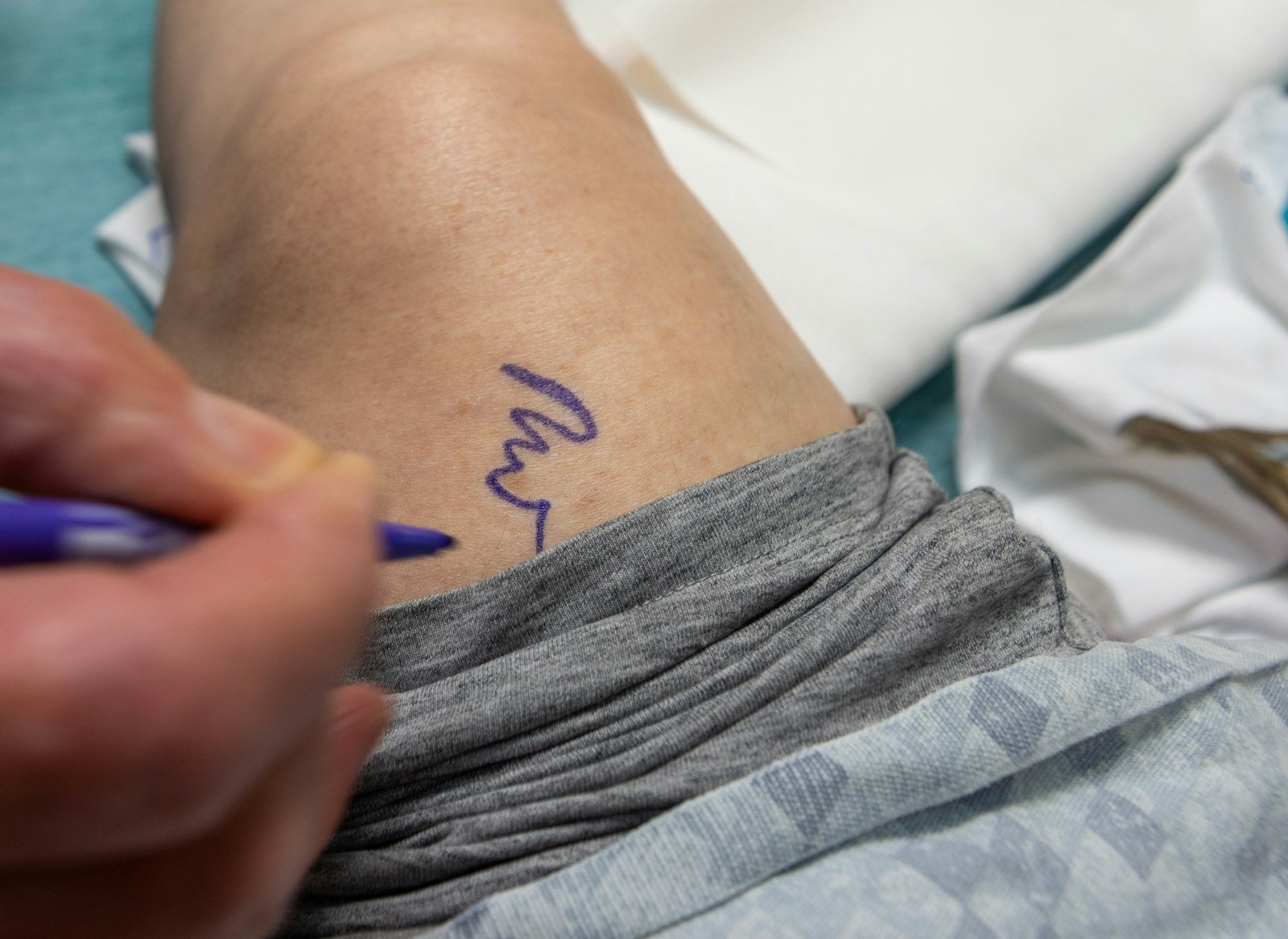
Take a photograph in the same light each time as well. Progress over a day is much easier to judge from images than from memory.
Conditions cellulitis is mistaken for
A surprising share of suspected cellulitis turns out to be something else. That matters, because those conditions do not improve with antibiotics.
| Condition | How it usually differs | What it needs instead |
|---|---|---|
| Cellulitis | One limb, warm, tender, spreading over hours to days, often with fever | Antibiotics |
| Venous stasis dermatitis | Usually both legs, chronic, itchy rather than painful, no fever | Compression and skin care |
| Deep vein thrombosis | Swelling and aching without much warmth or sharp-edged redness | Urgent imaging and anticoagulation |
| Contact dermatitis | Itchy, sometimes blistered, follows the shape of what touched the skin | Removing the trigger, topical treatment |
| Gout | Sudden, severe pain centered on a joint, often the big toe | Anti-inflammatory treatment |
| Lipodermatosclerosis | Long-standing hardening and tightening of the lower leg skin | Compression and vascular assessment |
If two courses of antibiotics have changed nothing, the most useful question is usually not which antibiotic next, but whether the diagnosis is right. That is one of the situations covered in our guide to when to see an infectious disease specialist.
There is no blood test that confirms cellulitis. The diagnosis is clinical, made from the appearance, the history and how the area behaves over time, which is exactly why tracking the border is so useful.
Who is more likely to get it
Anything that damages the skin barrier or impairs drainage and circulation raises the risk.
- Swelling in the legs, whether from venous disease, heart failure or lymphedema
- Diabetes, particularly with reduced sensation in the feet
- Athlete’s foot and cracked skin between the toes
- Eczema, psoriasis or any chronic skin condition
- Previous cellulitis in the same limb
- Obesity, and reduced mobility
- A weakened immune system

Warning signs that need same-day assessment
Most cellulitis can wait for a normal appointment. These features should not.
- Redness expanding quickly, or clearly past a line drawn a few hours earlier
- Fever, chills, or feeling suddenly and severely unwell
- Pain that seems out of proportion to how the skin looks
- Blisters, purple or blackened skin, or an area that becomes numb
- Infection on the face or around an eye
- Cellulitis in someone with diabetes, poor circulation or a suppressed immune system
- A red streak running up the limb toward the groin or armpit
Severe pain that outstrips the appearance of the skin, skin that turns dusky or blackened, or rapid deterioration over hours are emergency features. Seek immediate care rather than waiting for an appointment.
How it is treated
Most cases are treated with oral antibiotics chosen to cover the bacteria that usually cause cellulitis. Improvement is measured in a day or two, not hours, and the redness often looks slightly worse before it starts to settle.

Elevating the limb above the level of the heart genuinely speeds things up, because it reduces the swelling the bacteria are sitting in. It is the part of treatment most often skipped.
Intravenous antibiotics are used when the infection is severe, when oral treatment has failed, or when someone cannot take tablets. That no longer always means a hospital stay: treatment can often continue through an office infusion center, an approach covered in our article on what outpatient IV antibiotics involve.
Preventing the next episode
One episode of cellulitis makes another more likely in the same limb, so prevention is worth real effort.
- Treat athlete’s foot and any cracked skin between the toes
- Moisturize dry skin to keep the barrier intact
- Wear prescribed compression consistently if you have leg swelling
- Clean and cover breaks in the skin promptly
- Keep blood glucose in your target range if you have diabetes
- Have any chronic skin condition properly managed
If the wound that started it will not close, that is a separate problem with its own causes, set out in our article on why some wounds do not heal, and it may need specialist wound care.

Frequently asked questions
How long does cellulitis take to clear up?
Most people notice improvement within two to three days of starting antibiotics, though swelling and discoloration can take a couple of weeks to settle completely. If nothing has improved after two or three days, get reassessed rather than waiting out the course.
Is cellulitis contagious?
Not in the usual sense. It spreads through one person’s own tissue rather than between people. The underlying skin condition that let it in, such as athlete’s foot, can be passed on.
Why did my doctor draw a line on my leg?
To create a fixed reference point. Comparing the border against a marked line and a noted time is the simplest way to tell whether the infection is advancing or settling, and it is worth doing at home too.
Can I get cellulitis more than once?
Yes, and a previous episode is one of the strongest predictors of another in the same limb. Treating leg swelling and any fungal infection between the toes lowers that risk meaningfully.
When does cellulitis need a specialist?
When it recurs, fails to respond to treatment, involves a joint replacement or other implanted hardware, occurs in someone immunocompromised, or when the diagnosis is in doubt. Your physician can arrange a referral, and the practice contact page explains how to reach us.
More about the specialty is on the infectious disease physician page, and the clinicians are listed on the provider profiles page.
Sources and further reading: American Academy of Dermatology — Cellulitis.
This article is general health information, not medical advice, and it cannot account for your own history or medications. Discuss your situation with a qualified clinician before acting on anything you read here.