

Being told a culture grew MRSA lands badly. The word has been attached to “superbug” headlines for twenty years, and people reasonably assume they have caught something exotic and dangerous.
What MRSA actually describes is narrower and less frightening than that. It is ordinary staph, a bacterium that lives harmlessly on the skin and in the nose of roughly a third of people, which happens to be resistant to one family of antibiotics. The infection is the same infection. The list of drugs that will treat it is shorter.
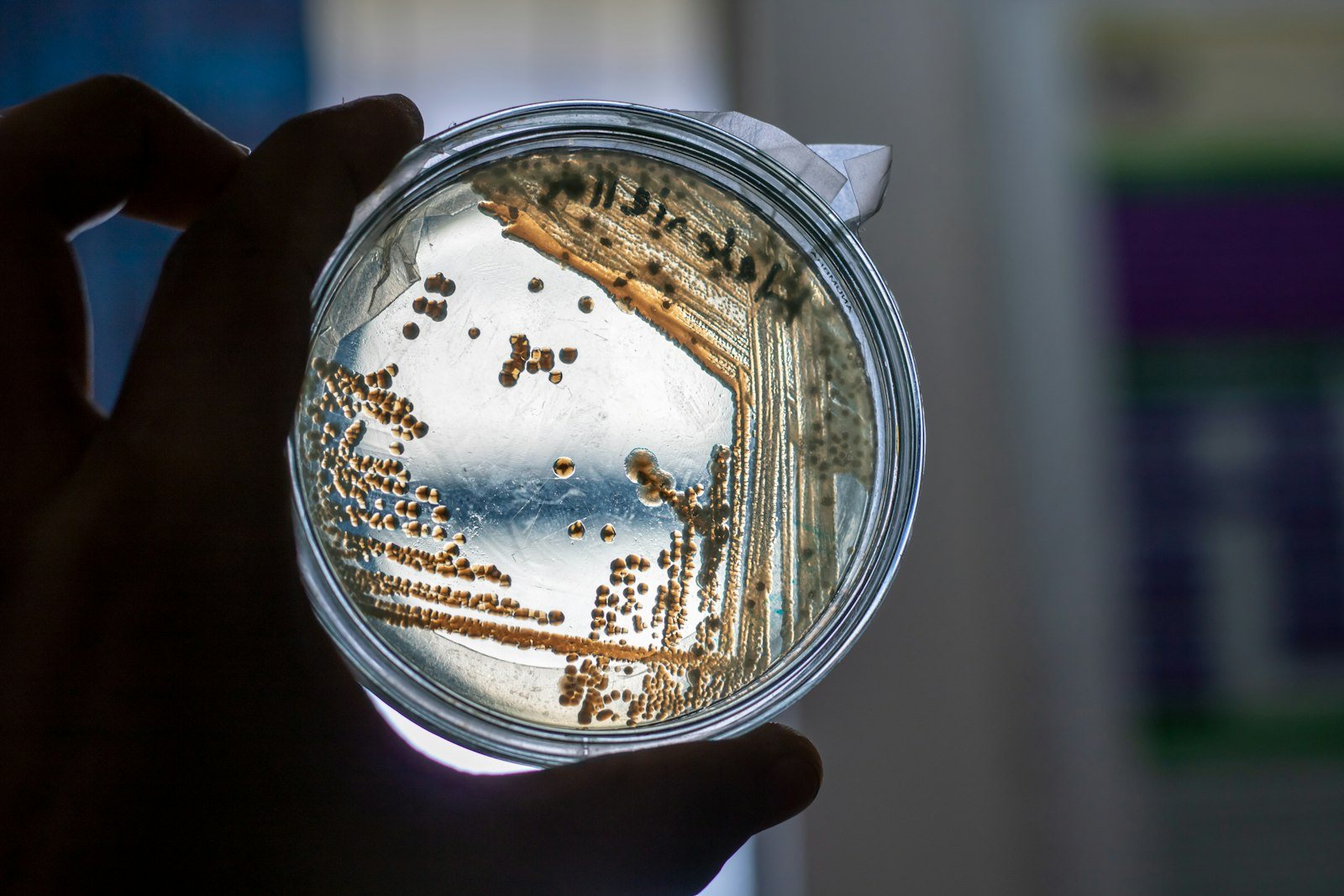
What the letters mean
Methicillin-resistant Staphylococcus aureus. Methicillin is an old antibiotic no longer used, and it survives in the name as shorthand for a whole family: the penicillins and the related drugs that would normally be first choice for a staph infection. Resistance to one predicts resistance to the others.
That is the entire meaning of the word. It says which antibiotics will not work. It says nothing about how aggressive the infection is, how deep it has gone, or how worried anyone should be, all of which come from examining the patient rather than reading the report.
| Ordinary staph | MRSA | |
|---|---|---|
| Which antibiotic | Penicillin family, usually oral | A different class; sometimes intravenous |
| Whether drainage is needed | Often, for an abscess | Equally often; unchanged |
| How long treatment runs | Depends on the site | Depends on the site; unchanged |
| How dangerous it is | Depends where it is | Depends where it is; broadly similar |
| Precautions in hospital | Standard | Contact precautions may be added |
| What it means for your household | Basic hygiene | Basic hygiene, applied more carefully |
The row people expect to differ is the fourth one. For a skin infection treated with the right drug, MRSA is not meaningfully more dangerous than ordinary staph. What makes staph dangerous is reaching the bloodstream, a joint or a heart valve, and that is true of both.
Two quite different MRSA stories
The distinction that matters clinically is where it was acquired, because the two behave differently and turn up in different people.
- Community-associated MRSA typically causes skin and soft-tissue infections in otherwise healthy people. It often presents as a boil or abscess that someone is convinced is a spider bite.
- Healthcare-associated MRSA occurs in people with recent hospital stays, surgery, catheters or dialysis, and shows up in wounds, the bloodstream and around implanted devices.
The spider-bite conviction is worth naming. A painful, rapidly growing lump with a central point is far more often a staph abscess than a bite. Our article on animal and human bites covers what genuine bites actually look like, and cellulitis covers the spreading redness that sometimes accompanies it.
Treatment, and the part antibiotics do not do
For a skin abscess, the single most important treatment is drainage. That is not a preliminary step before the real treatment; for many abscesses it is the treatment, and antibiotics are an adjunct. An abscess that is not drained will not reliably resolve on antibiotics however carefully they are chosen.
Where antibiotics are needed, several oral options work against community-associated MRSA. Deeper infections, and anything involving the bloodstream, bone or a prosthesis, are treated intravenously and for considerably longer, which is often arranged through outpatient IV antibiotics rather than in hospital.
- Do not squeeze or dig at an abscess; it pushes infection deeper
- Keep it covered with a clean dry dressing until it has healed
- Finish the course you were given, for the reasons in our article on antibiotic resistance
- Go back if the redness is spreading, not shrinking, after 48 hours
- Deep infections in bone or joints are a different undertaking; see bone and joint infections
Red streaks spreading from the site, fever with a skin infection, or a wound that suddenly becomes much more painful are reasons to be seen the same day rather than to wait for a scheduled appointment.
Why resistance happened here in the first place
Staph acquired this resistance the way bacteria usually do: it was exposed to the antibiotic repeatedly, and the strains that could survive it were the ones left to multiply. That process began within a few years of the drug being introduced, and it has been going on ever since.
This is the practical case for not taking antibiotics that cannot help you. Every unnecessary course applies the same selective pressure, in your own body and in the community, and MRSA is simply the most familiar name for the result. Our article on antibiotic resistance sets out how that works in more detail.
Carrying it is not the same as being infected
A significant number of people carry MRSA in their nose or on their skin without any infection at all. Colonization is not illness, does not cause symptoms, and is not treated in most circumstances.
Decolonization, usually a nasal ointment and antiseptic washes, is used in specific situations: before certain operations, or when someone has repeated infections. It is not routine, it does not always hold, and using it indiscriminately breeds resistance to the very treatments it relies on.
What actually prevents spread

MRSA spreads by contact, most often through hands and shared items rather than through the air. The measures that work are unglamorous and effective.
- Wash hands properly, and use sanitizer when soap is not available
- Keep any wound covered until it has healed
- Do not share towels, razors, or bar soap
- Wash towels and bed linen in hot water and dry them thoroughly
- Wipe down shared gym equipment before and after use
- Cover cuts before training or playing contact sports

Households where one person has a MRSA infection do not need to be disinfected top to bottom. Routine cleaning of surfaces that hands touch, plus the list above, is what is actually recommended.
When it warrants a specialist
- Infections that keep coming back despite correct treatment
- Any MRSA found in the bloodstream, which is always a serious matter
- Infection around a joint replacement, pacemaker or other implanted device
- Wounds that are not healing, which our article on why some wounds do not heal covers
- Infections in people with diabetes, particularly foot ulcers
- A reported penicillin allergy narrowing the options further
Resistant organisms are a large part of what an infectious disease practice does, from choosing the drug to arranging the monitoring. Our article on when to see an infectious disease specialist sets out what that assessment adds, and you can reach us through the contact page.
Frequently asked questions
Is MRSA more dangerous than regular staph?
For a skin infection treated with the right antibiotic, not meaningfully. What makes any staph dangerous is reaching the blood, a joint or a heart valve, and that is true of both resistant and non-resistant strains.
Can I give MRSA to my family?
It can spread by contact, so keep wounds covered, wash hands, and do not share towels or razors. Deep cleaning the house is not necessary, and family members do not need testing unless they develop infections.
I was told I carry MRSA but have no infection. Do I need treatment?
Usually not. Carrying it is not illness. Clearance treatment is reserved for specific circumstances such as before certain surgery or with recurrent infections.
Why was my abscess drained instead of just treated with antibiotics?
Because for many abscesses drainage is the definitive treatment and antibiotics are the supporting act. An undrained collection often will not clear on antibiotics alone.
Does a MRSA infection mean I will always have it?
No. The infection is treated and resolves. You may carry the bacteria for a period afterwards, and carriage can also disappear by itself over time.
Sources and further reading: Minnesota Department of Health — Methicillin-resistant Staphylococcus aureus (MRSA).
This article is general health information, not medical advice, and it cannot account for your own history or medications. Discuss your situation with a qualified clinician before acting on anything you read here.