
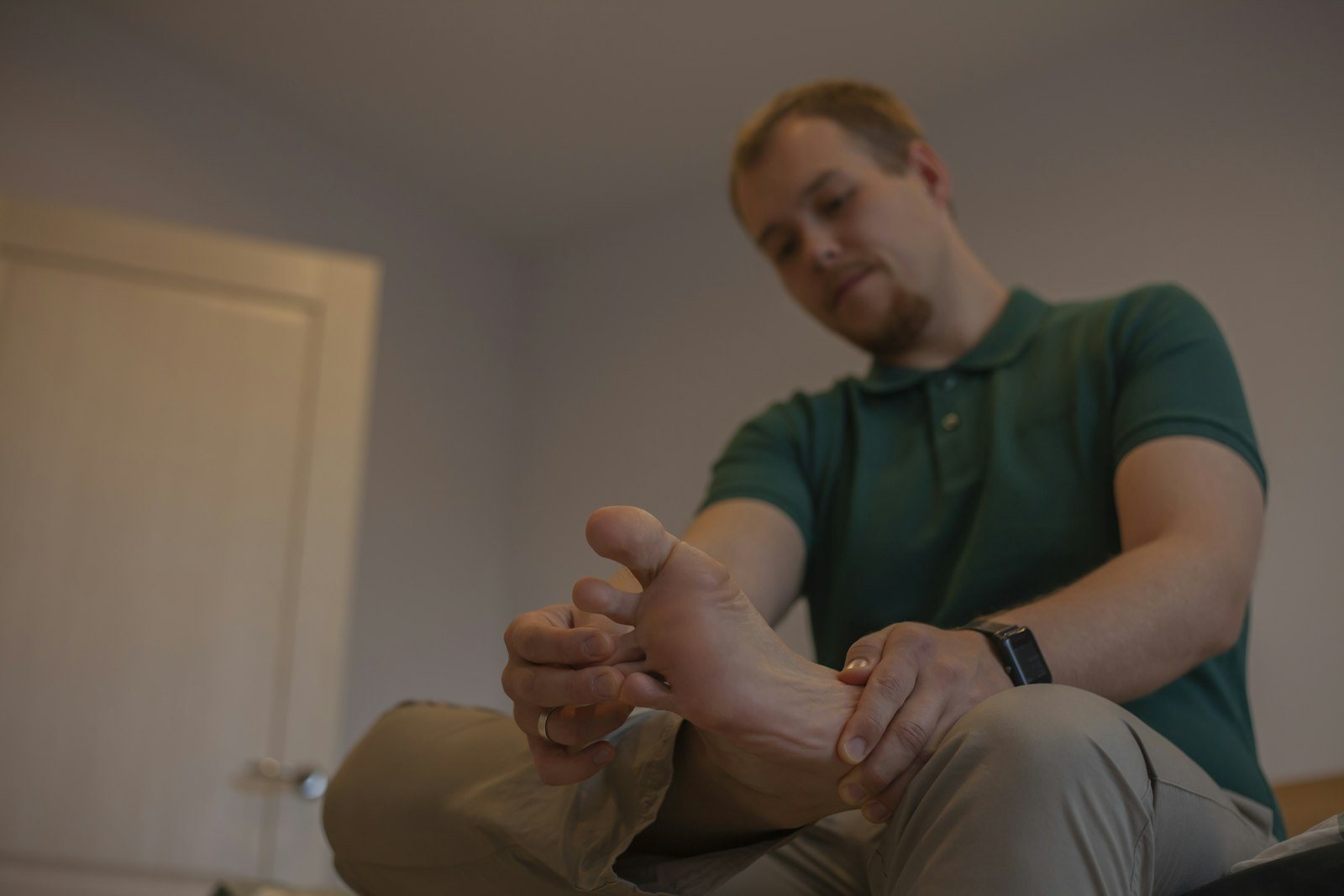
Most diabetic foot ulcers do not begin dramatically. They begin with a blister from a new shoe, a small stone that stayed in a sock, or a callus that was trimmed a little too enthusiastically.
What turns those ordinary events into a serious wound is that they can go unnoticed for days. The two-minute check that prevents that is the single most effective habit available.

Why feet are vulnerable in diabetes
Three problems tend to arrive together, and each makes the others worse.
Nerve damage removes the warning
Peripheral neuropathy blunts or removes sensation in the feet. Pain is the body’s alarm for injury, and without it a blister or a foreign object can cause real damage while feeling like nothing at all.
Neuropathy also affects the small nerves controlling sweat, leaving skin dry and prone to cracking, and it can subtly change the shape of the foot so that pressure lands in new places.
Circulation is reduced
Peripheral arterial disease narrows the vessels supplying the foot. Less blood means less oxygen for repair, so a small wound that would heal in days elsewhere can persist for weeks.
Infection takes hold more readily
Elevated blood glucose impairs the function of the immune cells that would normally clear bacteria at the site. An open wound on a poorly perfused, poorly defended foot is a genuinely dangerous combination.
The daily check
It takes about two minutes and works best attached to something you already do, such as undressing at night.
- Look at the top, sides and sole of each foot, and between every toe
- Use a hand mirror on the floor, or ask someone, if you cannot see the sole
- Feel for warm spots, hard areas and swelling as well as looking
- Check for cuts, blisters, cracks, calluses, color changes and ingrown nails
- Check inside your shoes for stones, ridges and worn linings before putting them on
A warm spot with no visible break in the skin still matters. Localized heat often precedes visible breakdown, and it is one of the earliest signals available.
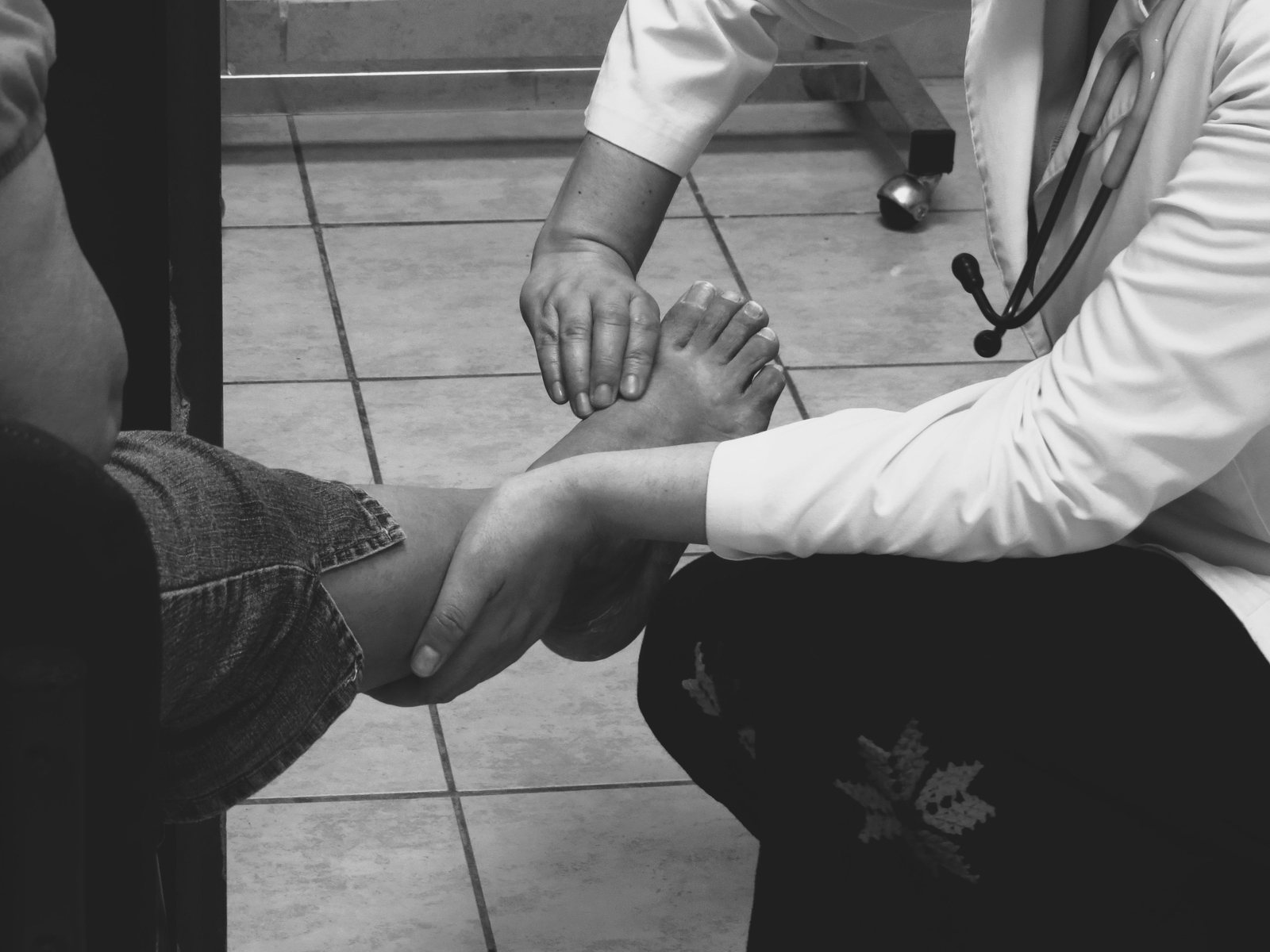
How often your feet should be examined professionally
Frequency depends on what has already been found, not on how your feet feel.
| Risk level | What it means | Typical review |
|---|---|---|
| Low | Normal sensation, normal circulation, no deformity | Once a year |
| Moderate | Neuropathy, or reduced circulation, or foot deformity | Every three to six months |
| High | More than one of the above, or a previous ulcer or amputation | Every one to three months |
| Active ulcer | A wound is currently present | Specialist wound care, reviewed frequently |
Note that the highest-risk category includes anyone who has healed an ulcer before. Recurrence is common, and previous ulceration is one of the strongest predictors of another.
Footwear does more than anything else
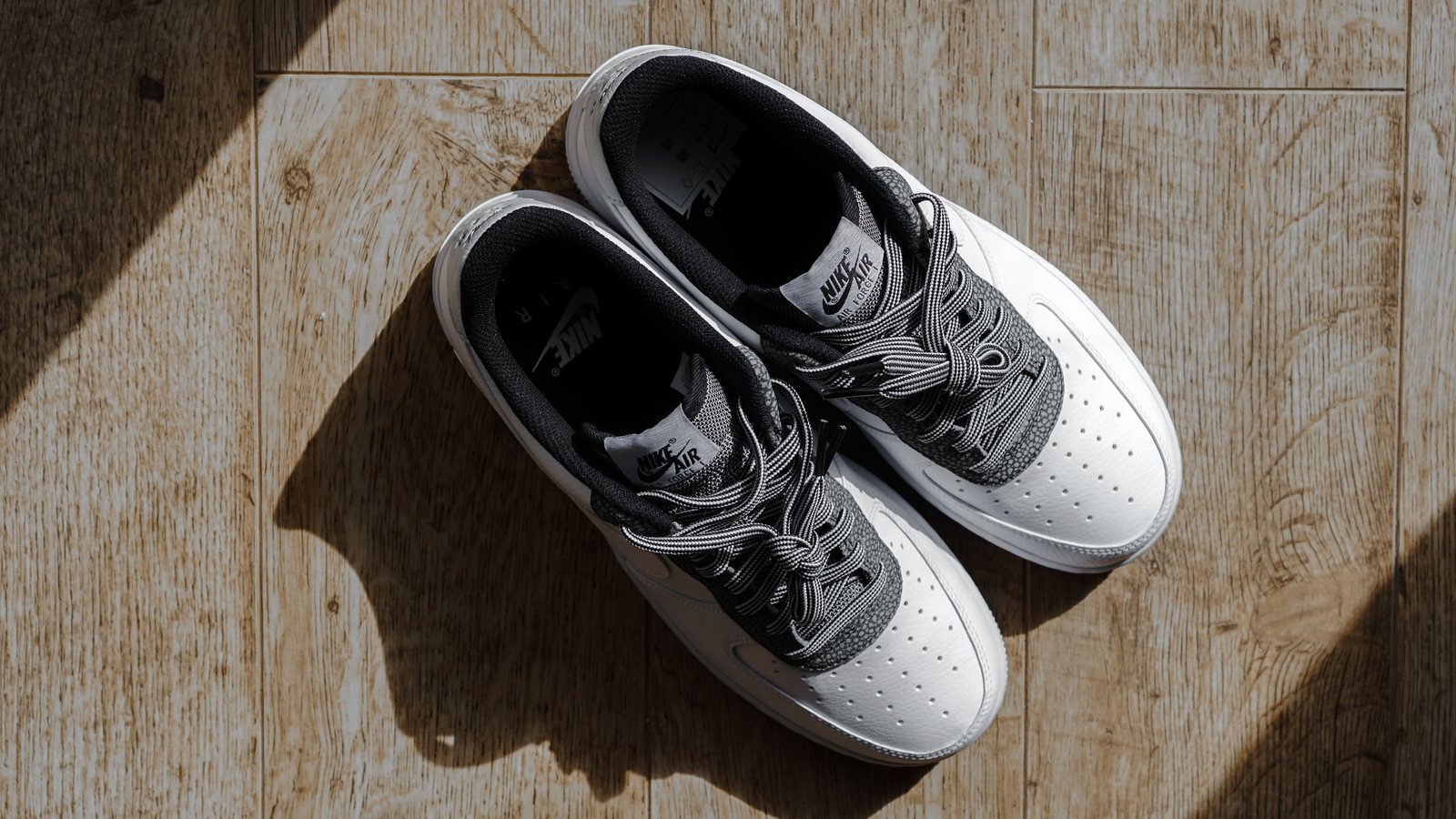
Pressure is what breaks skin down, and shoes are what distribute it.
- Never walk barefoot, including indoors and at the beach
- Choose a roomy toe box, adjustable fastening and a smooth, seamless lining
- Shop for shoes late in the day, when feet are at their largest
- Break new shoes in gradually, an hour at a time, checking your feet afterwards
- Wear seamless socks and change them daily
- Use prescribed therapeutic footwear or insoles consistently, not just for outings
If you have neuropathy, a deformity, or a previous ulcer, therapeutic footwear is not a comfort upgrade. It is the intervention doing the most work.
Day-to-day skin and nail care
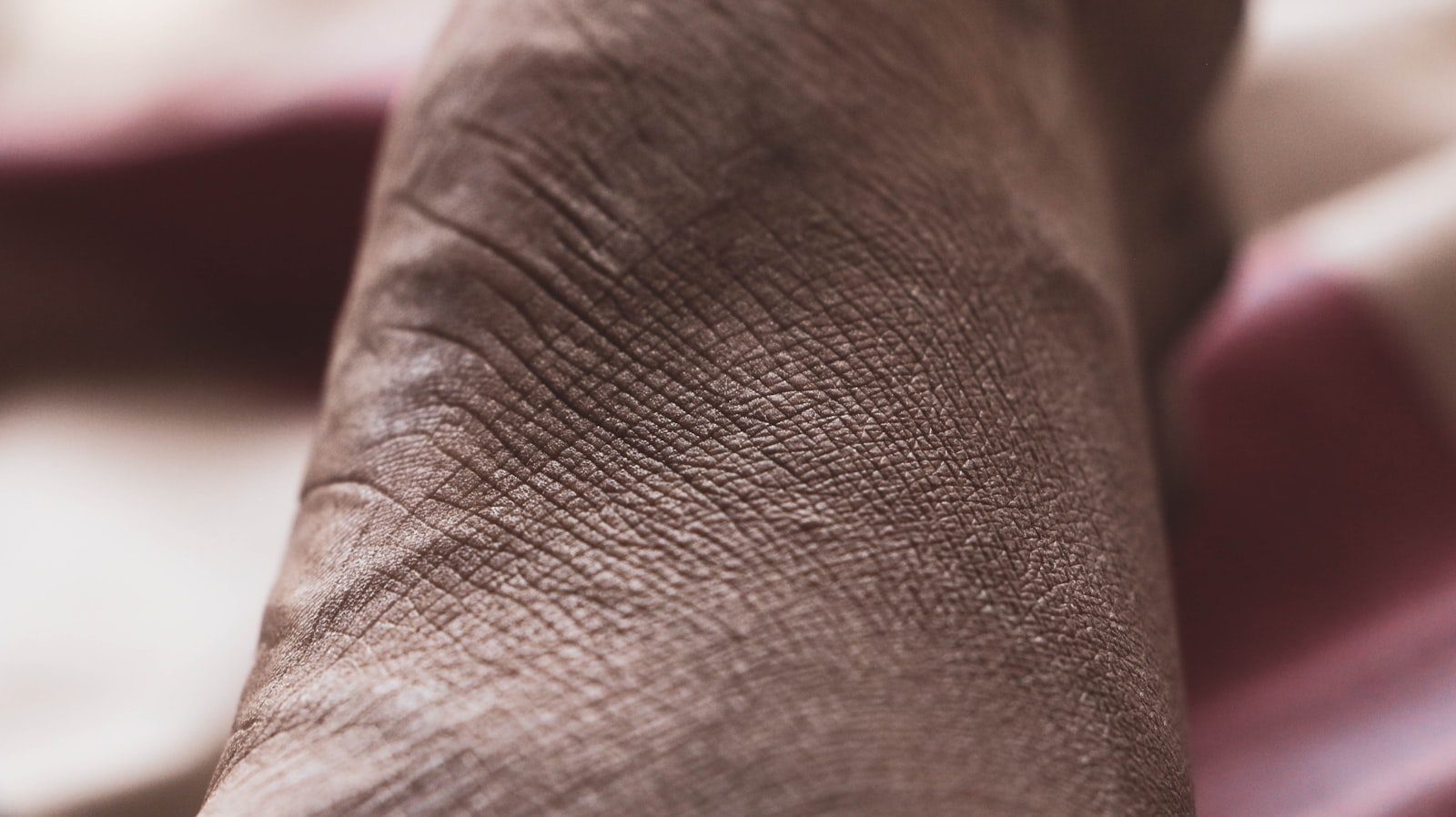
Dry, cracked skin is an entry point, and neuropathy makes it more likely by reducing the sweating that normally keeps skin supple.
- Wash feet daily in warm, not hot, water and dry thoroughly between the toes
- Moisturize the tops and soles, but not between the toes, where damp encourages fungus
- Cut nails straight across rather than curved down at the corners
- Treat athlete’s foot promptly; cracked skin between the toes is a common starting point
- Test bath water with your hand or elbow, never your feet
- Avoid hot water bottles, heat pads and radiators near the feet
That last point causes more harm than people expect. Burns on insensate feet are a recognized cause of serious wounds, and they happen at temperatures that would feel merely warm elsewhere.
What to call about, and how soon
Because sensation is unreliable, the threshold for reporting has to be visual and low.
- Any open area, blister, crack or break in the skin, however small
- Redness, warmth or swelling in one part of the foot
- A callus that has darkened, or has bleeding underneath it
- Any discharge, odor, or staining on your sock
- A change in the shape of the foot, or a new area of pressure
- A nail that has become ingrown or discolored
Redness spreading up the foot, fever, foul-smelling discharge, or an area that turns black are emergency features. Seek care the same day rather than waiting for a scheduled appointment.
None of this needs to be burdensome. The daily check takes two minutes, the footwear rules become habit within a fortnight, and the professional reviews are already part of routine diabetes care for most people. The effort is small relative to what it prevents.
If a wound does develop
Treatment addresses the causes rather than the wound alone: taking pressure off the area, restoring circulation where possible, controlling infection and controlling blood glucose. Dressings support that work but do not substitute for it.
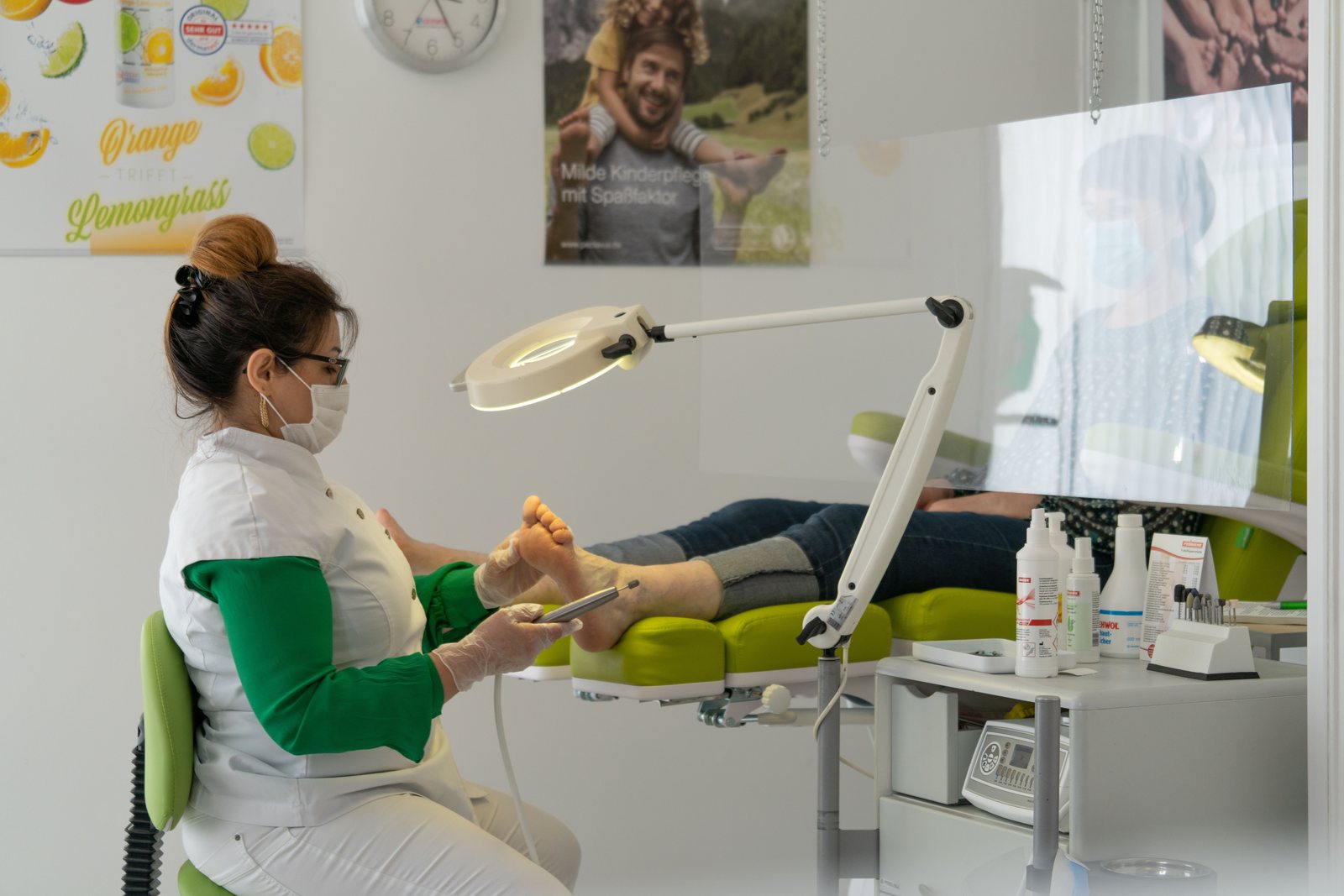
Offloading is usually the intervention that matters most, and it is also the one people find hardest to sustain, because it means not walking normally on a foot that does not hurt.
Our article on why some wounds do not heal covers the wider picture, and specialist wound care describes the service. Where infection reaches bone, treatment follows the path set out in bone and joint infections.
Frequently asked questions
How often should I check my feet?
Every day. It takes about two minutes, and it is the single most effective thing you can do, precisely because neuropathy means you cannot rely on pain to alert you.
I have no pain in my feet. Do I still need to check them?
Especially then. Absent pain usually means reduced sensation, which is what allows a small injury to become a serious wound unnoticed. No pain raises the importance of looking, not the reverse.
Can I trim my own calluses?
Do not cut them yourself, and avoid medicated corn removers. Both cause wounds on feet that heal poorly. Calluses should be managed by a professional.
Are diabetic shoes actually worth it?
For anyone with neuropathy, a foot deformity or a previous ulcer, therapeutic footwear reduces pressure where the risk is highest. It prevents more ulcers than any dressing treats.
How quickly should I report a small blister?
The same week, and the same day if there is redness, warmth, swelling, discharge or fever. On a foot with reduced sensation the size of the visible problem is a poor guide to what lies underneath.
The patient guide covers what to bring to an appointment, and the contact page explains how to reach the practice.
Sources and further reading: American Diabetes Association — Foot complications.
This article is general health information, not medical advice, and it cannot account for your own history or medications. Discuss your situation with a qualified clinician before acting on anything you read here.