

A dog bite that tears the skin looks alarming and gets attention immediately. A cat bite leaves two small punctures that stop bleeding in a minute and look like nothing at all.
The cat bite is the one far more likely to become infected. Understanding why explains most of what matters about bite wounds, and it is the opposite of what the appearance suggests.
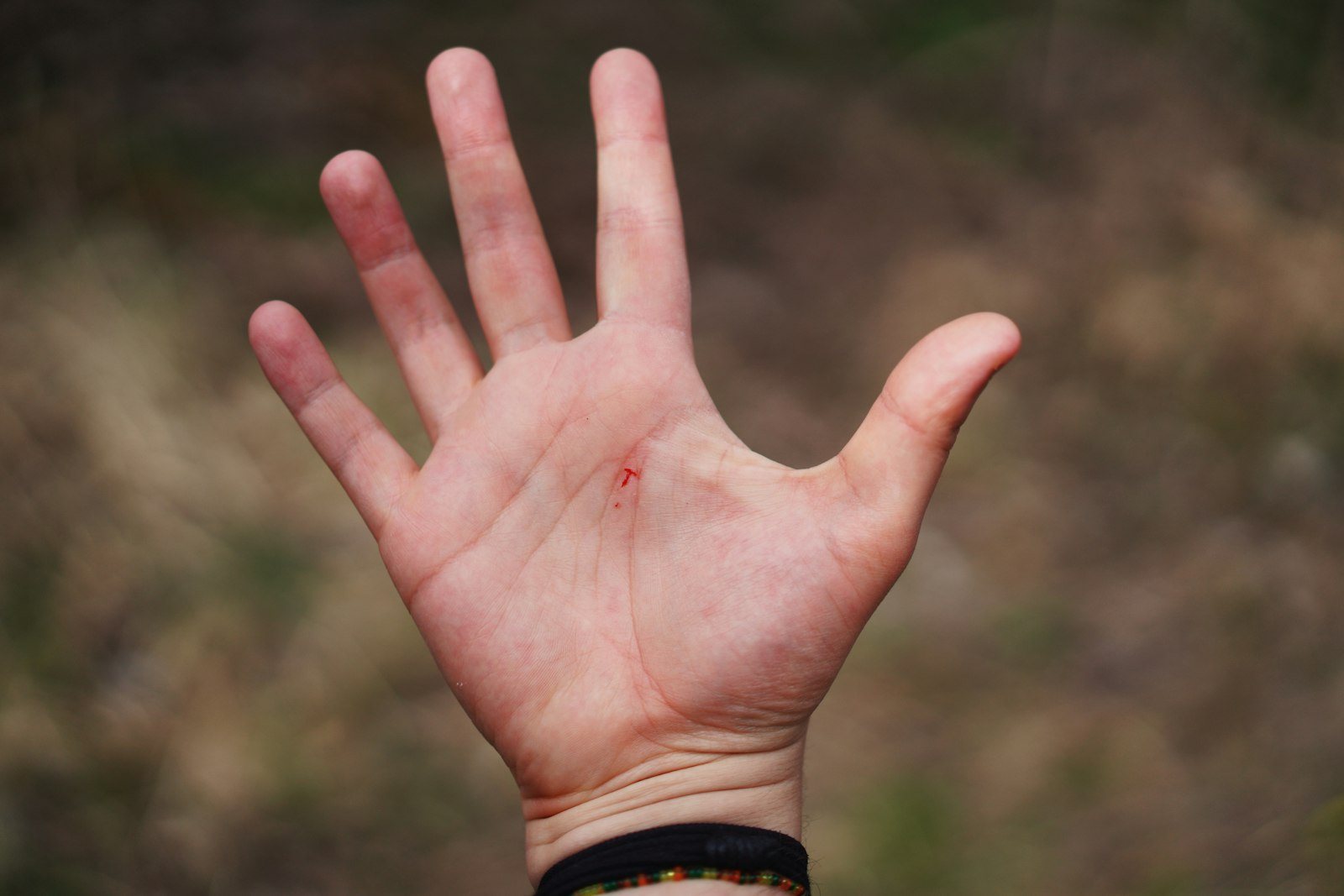
Why bites infect so readily
A bite is not a clean cut. It is an injection of mouth bacteria into tissue, delivered by teeth designed to puncture. The mouths of cats, dogs and humans all carry dense mixed populations of bacteria, and a bite deposits them below the skin where the immune system has more difficulty reaching them.
The shape of the wound then decides what happens next. A wide laceration bleeds freely, washes itself out to some degree and can be cleaned thoroughly. A narrow puncture seals over within hours, trapping bacteria in a warm pocket with damaged tissue and no drainage. Cats have long, fine teeth, so they produce exactly the second kind.
| Bite | Typical wound | Infection risk | Particular concern |
|---|---|---|---|
| Cat | Deep, narrow punctures | High, often around half | Reaches joints and tendon sheaths easily |
| Dog | Crushing and tearing | Lower, roughly one in five | Tissue damage; force injuries in children |
| Human | Puncture or laceration | High | Knuckle wounds from a punch are the worst kind |
| Rodent or rabbit | Small puncture | Low | Rarely needs antibiotics |
| Wild mammal | Variable | Variable | Rabies assessment comes first |
The first hour

What happens in the first hour has more influence on whether a bite becomes infected than anything prescribed later. The main intervention is unglamorous: water, and a lot of it.
- Let it bleed briefly. Bleeding flushes the wound; do not rush to stop it
- Wash under running water for a full five minutes, longer than feels necessary
- Use soap around the wound; irrigate the wound itself thoroughly with water
- Apply pressure with a clean cloth if bleeding continues
- Cover with a clean dry dressing, but do not tape a puncture wound tightly closed
- Raise the area above heart level, which limits swelling considerably
- Write down the time of the bite, and what bit you
Do not use hydrogen peroxide, alcohol or iodine inside a puncture wound. They damage the tissue trying to heal without reliably reaching the bacteria that are already deep. Running water in quantity does more good.
Cat bites, and the hand

Cat bites are the highest risk of the common ones, and cat bites to the hand are higher still. The hand has very little soft tissue between skin and the structures beneath, so a puncture that looks superficial can seed a joint or a tendon sheath directly.
A tendon sheath infection is a surgical problem, not an antibiotic problem, and it can cost permanent function if it is left. The warning combination is a finger that is swollen along its whole length, held slightly bent, painful to straighten, and tender along the tendon rather than just at the puncture.
Any cat bite over a joint or on the hand should be assessed the same day, even if it looks trivial and even if you feel completely well. This is the single most common bite scenario that turns into a serious problem.
Human bites, and the injury nobody reports
Human bites carry an infection risk comparable to cat bites. The most important is not a bite in the ordinary sense at all: it is the wound made when a closed fist strikes someone in the mouth and a tooth splits the skin over a knuckle.
That injury reaches the joint capsule almost by definition. When the hand relaxes afterwards, the tendon carries contamination back inside and the small skin wound closes over it. It is very often presented late, and sometimes described as something else, which is exactly why it goes wrong.
Any wound over a knuckle following a punch needs same-day assessment. Saying plainly how it happened changes the treatment; a knuckle wound described as catching the hand on a door frame does not get the attention it needs.
In the clinic
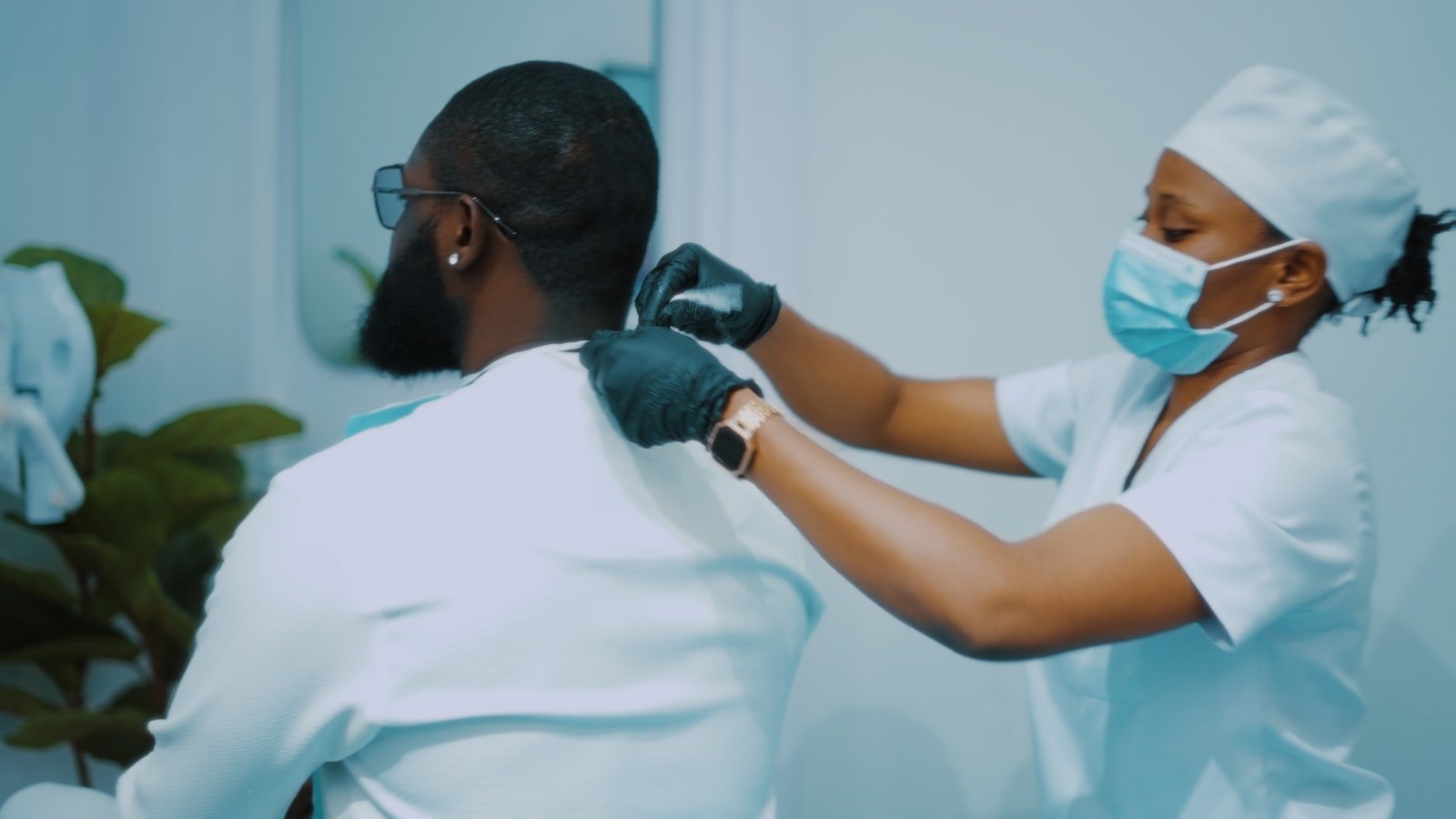
Assessment covers the wound, what is underneath it, and two questions that have nothing to do with bacteria: tetanus and rabies.
- Irrigation and exploration. The wound is cleaned properly and checked for damage to tendon, nerve or joint, and for a retained tooth fragment
- Closure. Many bites, especially punctures and hand wounds, are left open on purpose; closing them raises infection risk
- Tetanus. A booster is given if it has been more than five years, which is a shorter interval than the usual ten for a dirty wound
- Rabies. Assessed for bats and wild mammals, and for domestic animals whose vaccination status is unknown or that cannot be observed
- Antibiotics. Prophylaxis is usual for cat bites, human bites, hand and face wounds, deep punctures, and anyone with reduced immunity
The standard choice covers the mixed mouth bacteria involved, and it is a penicillin-class combination. If you carry a penicillin allergy label, say so early, and read our article on whether that label is accurate — the alternatives for bite wounds are noticeably less good, and most labels turn out to be wrong.
People without a functioning spleen, on immune-suppressing treatment, or with poorly controlled diabetes are treated more cautiously across the board. A dog bite in someone without a spleen is a specific and urgent situation.
When to be seen, and how quickly

- Any cat bite, particularly to the hand, and any bite over a joint
- Any wound over a knuckle after a punch
- A bite from a bat, or any wild or unfamiliar animal
- Bites to the face, hand, foot or genitals
- Any bite in someone with diabetes, no spleen, or suppressed immunity
- Deep wounds, wounds you cannot clean, or wounds that will not stop bleeding
Return the same day if redness spreads, pain increases after the first day, the area becomes hot and swollen, fluid or pus appears, you develop fever, or you cannot move the part normally. Spreading redness after a bite is cellulitis, and treated bites can still become infected.
Frequently asked questions
The bite looks fine. Do I still need to be seen?
For cat bites, hand wounds, knuckle injuries and bites in anyone with reduced immunity, yes. How a bite looks in the first hours predicts very little, and these are the wounds that infect after they have already closed over.
My own pet bit me. Is that lower risk?
The rabies question is usually simpler, because a vaccinated pet can be observed. The bacterial risk is exactly the same. A cat bite from your own cat carries the same odds as any other cat bite.
When do I need a tetanus shot?
If your last booster was more than five years ago. Bites count as dirty wounds, so the interval is shorter than the ten years that applies to routine boosters. Our article on adult vaccines covers where that fits in the schedule.
Should the wound be stitched?
Often not. Closing a bite can trap bacteria and raise infection risk, so many are left open deliberately, particularly punctures and hand wounds. Facial wounds are the usual exception, where appearance is weighed against the risk.
How long until I know it is not infected?
Most bite infections declare themselves within twenty four to seventy two hours. Pain that increases after the first day is the most useful early warning, because normal wound pain should be improving by then.
For wounds that are slow to heal after the initial infection has settled, our article on why some wounds do not heal covers what gets in the way. You can reach the practice through the contact page.
Sources and further reading: familydoctor.org (American Academy of Family Physicians) — Cat and dog bites.
This article is general health information, not medical advice, and it cannot account for your own history or medications. Discuss your situation with a qualified clinician before acting on anything you read here.