
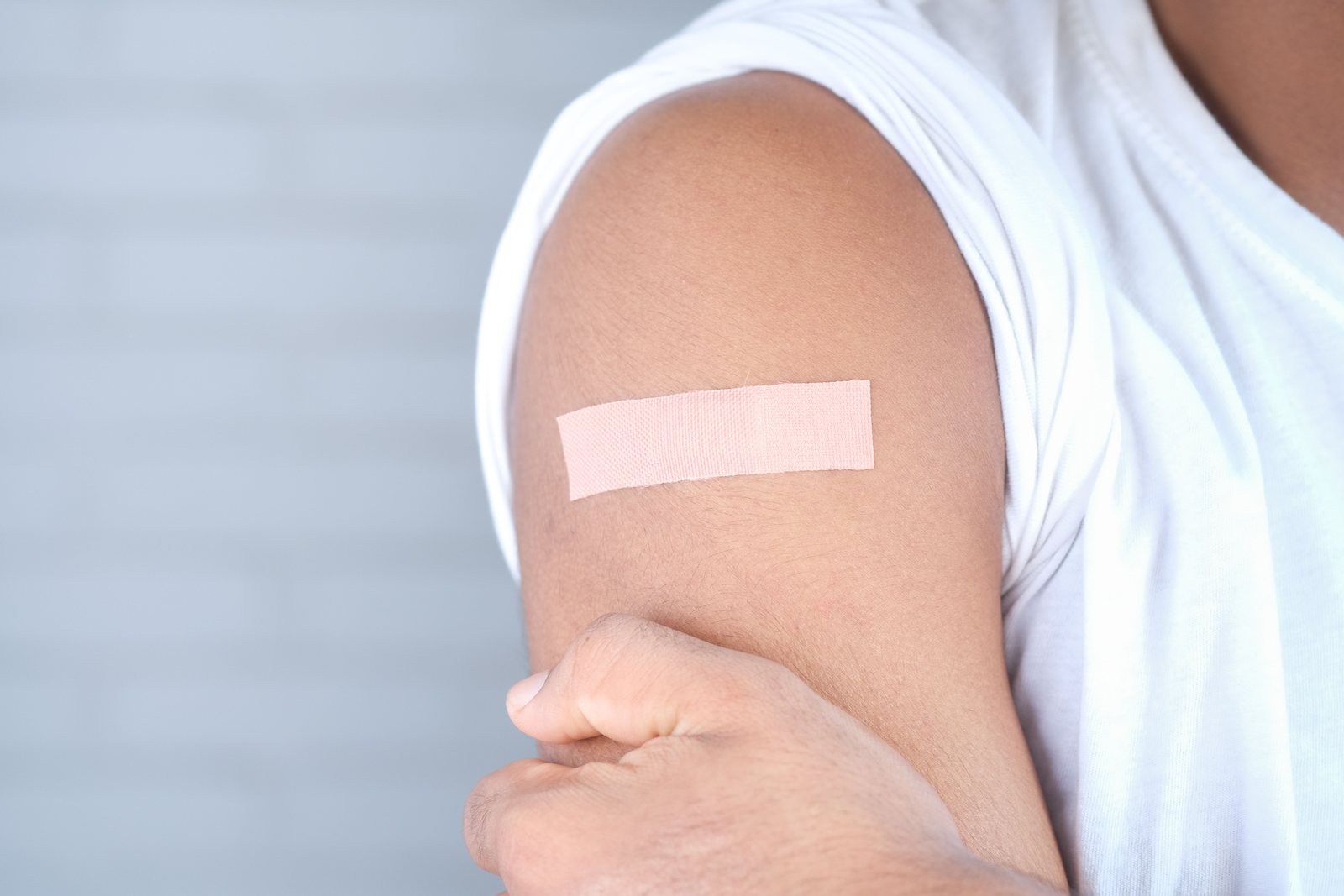
Childhood vaccination is organized, scheduled and chased up. Adult vaccination is largely left to the individual to remember, and most people have no idea what they are due or when they last had anything.
The adult schedule is genuinely useful, and it is shorter than people expect. It is built around a small standing list, a few things that change with age, and a set of additions that depend on health conditions rather than on birthdays.
How the adult schedule is organized
Rather than memorizing a list, it helps to see the four reasons an adult vaccine is recommended. Almost everything fits one of them.
| Reason | What it covers | Example |
|---|---|---|
| Every year | Protection that does not last | Influenza, each fall |
| Periodic booster | Protection that fades over years | Tetanus and diphtheria, every ten years |
| Age threshold | Risk that rises with age | Shingles and pneumococcal vaccines |
| Health condition or exposure | Risk from a condition, job or travel | Hepatitis B, and travel vaccines |
One caution before any specifics. Adult recommendations are reviewed and changed regularly, and the age thresholds in particular have moved more than once in recent years. Treat what follows as the shape of the schedule rather than the final word, and confirm the current detail against the schedule linked at the end of this article or with your own clinician.
The annual one
Influenza vaccine is recommended every year for essentially all adults. It is annual for two separate reasons: the circulating strains change, and the protection itself fades over a season.
Timing matters more than people realize. Fall, before influenza is circulating widely, is the target. It takes about two weeks to take effect, and getting it in December after an outbreak has started gives away much of the benefit. Higher-dose formulations are available for older adults, whose response to the standard version is weaker.
The one most adults are overdue for
Tetanus, diphtheria and pertussis protection needs a booster every ten years, and this is the vaccine adults are most commonly behind on. Many people last had it in childhood.
The pertussis component is the part that has changed. At least one adult booster should include it, because whooping cough remains in circulation and adults with a mild, lingering cough are a common source of infection in infants who are too young to be protected themselves.
It is also the vaccine most likely to be needed at short notice, since a dirty wound or a bite requires a booster if it has been more than five years. Our article on bites and infection risk covers that shorter interval.
In pregnancy, a pertussis-containing booster is recommended in every pregnancy, timed to pass protection to the baby. Our article on infections and vaccines in pregnancy covers the detail.
What changes as you get older

- Shingles. Recommended from age fifty, given as two doses. Also recommended for younger adults with suppressed immunity. Our article on shingles, its pain and the vaccine explains why it matters beyond the rash
- Pneumococcal. Recommended at an age threshold that has been lowered in recent years, and earlier for adults with chronic heart, lung, liver or kidney disease, diabetes, no spleen, or suppressed immunity. Relevant to anyone who has had pneumonia
- RSV. Recommended for older adults, with a lower age threshold for those with chronic conditions
- COVID-19. Recommendations are updated each season and are now largely organized around age and risk rather than applying uniformly
The age thresholds for pneumococcal, RSV and COVID-19 vaccines have all been revised within the last few years. If you were told you were too young for one of these, that advice may no longer hold. It is worth asking again.
The ones that depend on you, not your age
A second group is recommended because of a health condition, a job, a living situation or travel, and these are the ones most often missed because nothing prompts them.
- Hepatitis B — now recommended for all adults through middle age, and beyond that for anyone with diabetes, kidney disease, liver disease or specific risk factors
- Hepatitis A — for liver disease, certain exposures and some travel
- HPV — routine through the mid twenties, and a discussion worth having up to the mid forties
- Meningococcal — for people without a spleen, certain immune conditions, some students and some travel
- MMR and varicella — for adults with no evidence of immunity, though these are live vaccines and not given during pregnancy or with significant immune suppression
- Travel vaccines — covered in our article on how far in advance to book travel vaccines
If you take an immune-suppressing medication, or are being assessed for one, raise vaccination before starting rather than after. Live vaccines are generally avoided once immunity is suppressed, and the response to inactivated vaccines is better beforehand. The same conversation usually covers screening for latent tuberculosis.
Finding out what you have already had

Almost nobody knows their full history, and the records are more findable than people assume. Georgia maintains a statewide immunization registry, and pharmacies keep records of everything they administer.
- Ask your primary care office to check the state immunization registry
- Ask any pharmacy where you have had a flu shot; they hold their own records
- Employers, universities and the military often hold records for required vaccines
- Blood testing can confirm immunity to hepatitis B, measles and chickenpox where records cannot be found
- Where nothing can be established, it is safe to vaccinate rather than assume
Once you have assembled it, keep a copy yourself. It is asked for on travel, before surgery, when starting immune-suppressing treatment, and at every new registration.
Where to get them

Most routine adult vaccines are available at pharmacies without an appointment, and most are covered by insurance as preventive care. Vaccines tied to a specific condition are usually better arranged through the clinician managing that condition, who can sequence them around treatment.
For travel, timing is the constraint rather than availability, and some schedules need weeks. Our travel medicine service handles that, and the practice page explains what else we cover.
Frequently asked questions
I have no idea what I have had. Where do I start?
Ask your primary care office to check the state immunization registry, and any pharmacy where you have had a flu shot. Between them, most adults can reconstruct the majority of their history. Where a record cannot be found, revaccinating is safe.
Is it harmful to have a vaccine I did not need?
Generally not. Receiving an extra dose of most vaccines is not dangerous, and where records are missing that is usually the preferred approach rather than leaving someone unprotected on an assumption.
Can I have more than one vaccine at the same visit?
Yes, and it is routine. Multiple vaccines can be given at one appointment, usually in different arms. It does not reduce how well any of them work.
Do I need a tetanus booster after every wound?
Not every wound, but the interval is shorter for dirty wounds and bites, where a booster is given if it has been more than five years rather than the usual ten.
I take medication that suppresses my immune system. Does that change things?
Yes, in two ways. Live vaccines are generally avoided, and the response to other vaccines may be reduced. This is why vaccination is reviewed before starting such treatment wherever possible. Discuss the specific drug rather than assuming a general rule.
Sources and further reading: Immunize.org — Vaccination schedules for patients.
This article is general health information, not medical advice, and it cannot account for your own history or medications. Discuss your situation with a qualified clinician before acting on anything you read here.