
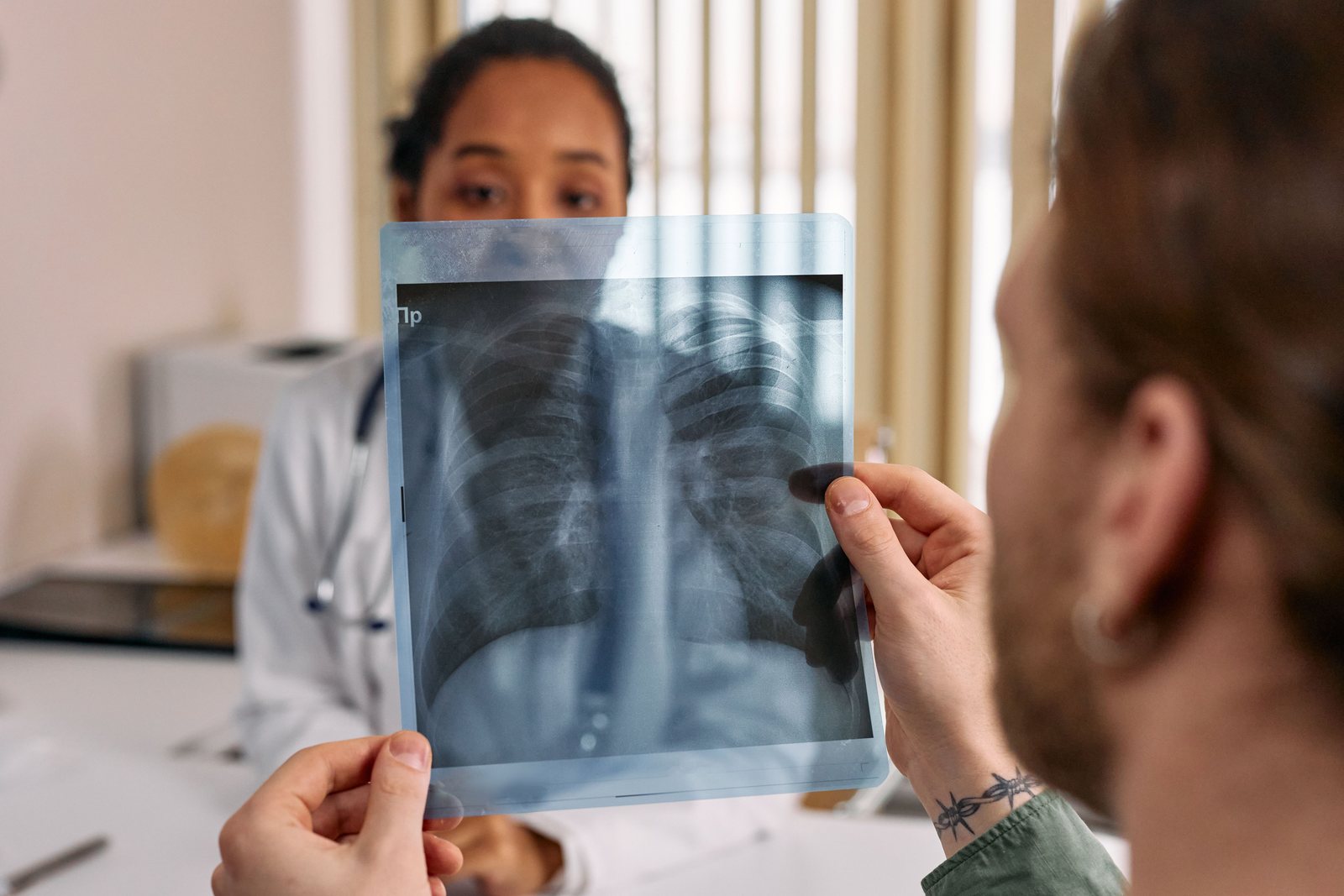
You had a tuberculosis test because a job, a school, an immigration application or a new medication required it. The test came back positive. You feel completely well.
In almost every case, this means latent tuberculosis infection. It is not the same as tuberculosis disease, you are not infectious, and there is nothing you need to do tonight. It does need attention, and here is why.
What latent means
Tuberculosis bacteria are inhaled in small numbers, usually from prolonged close contact with someone who had untreated tuberculosis of the lungs. In most healthy people the immune system surrounds the bacteria and walls them off before they can cause illness.
The bacteria are not killed. They sit dormant inside those walled-off pockets, doing nothing, sometimes for the rest of a persons life. The immune system holds the line, and the only trace is that a test can now detect the immune response.
That is latent infection: organism present, disease absent. You have no symptoms, your chest X-ray is normal, and you cannot pass tuberculosis to anyone, including children and people living in your home.
Latent and active are different conditions
| Latent infection | Active disease | |
|---|---|---|
| Symptoms | None | Cough, fever, night sweats, weight loss |
| Chest X-ray | Normal | Usually abnormal |
| Contagious to others | No | Yes, if in the lungs or airway |
| Feels unwell | No | Usually, and often for weeks |
| Skin or blood test | Positive | Usually positive |
| Treatment | One or two drugs, three to four months | Four drugs, six months or longer |
| Urgency | Planned, over coming weeks | Immediate |
The distinction matters because the tests cannot tell them apart. A positive skin or blood test is the beginning of the assessment, not the end of it. What separates the two is symptoms and a chest X-ray, which is why one is arranged before any treatment is offered.
If you have a cough lasting more than three weeks, fever, drenching night sweats or unexplained weight loss alongside a positive test, say so before anything else. That combination is assessed for active disease first, and it is treated differently.
The two tests, and why they disagree
There are two ways to test. The older is the skin test, where a small amount of protein is injected into the forearm and the raised area measured two to three days later. The newer is a blood test, which measures how your white cells respond to tuberculosis proteins in the tube.
The blood test has one clear advantage. If you were given BCG vaccine as a child, which is routine in much of the world and not in the United States, the skin test can read positive purely because of the vaccine. The blood test is not affected by BCG, so it answers the question the skin test leaves open.
- The skin test needs a second visit to be read; the blood test does not
- BCG vaccination can cause a false positive skin test, sometimes decades later
- Neither test distinguishes latent infection from active disease
- Neither test tells you when you were exposed
- A positive result does not become negative after treatment, so repeat testing is not used to check that treatment worked
Who is tested, and who should be
Testing is targeted rather than universal, because testing people at very low risk produces more false positives than real ones. Screening is aimed at people more likely to have been exposed, or more likely to become unwell if they were.

- People born in, or who lived in, countries where tuberculosis is common
- Close contacts of someone diagnosed with active tuberculosis
- Healthcare workers, and people who live or work in congregate settings
- Anyone about to start a TNF inhibitor or similar immune-suppressing biologic
- People with HIV, as covered in our article on HIV prevention and care
- People on dialysis, awaiting transplant, or on long-term steroids
- People having treatment for cancer that suppresses immunity
Why it is worth treating
Roughly five to ten percent of people with latent infection will develop active tuberculosis at some point, and most of that risk falls in the first two years after exposure. Ninety percent will never become unwell.
Those odds change sharply if immunity drops. Starting a TNF inhibitor for rheumatoid arthritis or inflammatory bowel disease, beginning chemotherapy, receiving a transplant, or having untreated HIV all raise reactivation risk substantially. This is why rheumatologists and transplant teams screen before starting these drugs rather than after.
Treating latent infection removes most of that future risk. It is the one point in the whole course of tuberculosis where a short, straightforward treatment prevents a long, difficult one.
What treatment involves

Treatment has become considerably shorter. The nine-month daily course many people have heard about is no longer the usual first choice. Current preferred regimens run three to four months, and shorter courses are completed far more often than long ones.
| Regimen | How long | How often |
|---|---|---|
| Isoniazid and rifapentine | 3 months | Once weekly, 12 doses |
| Rifampin alone | 4 months | Daily |
| Isoniazid and rifampin | 3 months | Daily |
| Isoniazid alone | 6 to 9 months | Daily |
Which one you are offered depends on your other medications, your liver, whether you are or may become pregnant, and what the strain is likely to be sensitive to. Rifampin in particular interacts with a long list of drugs, including hormonal contraception and some HIV medications, so the full list of what you take matters.
Liver blood tests are checked at the start, and repeated during treatment if you have risk factors. Report nausea that does not settle, abdominal pain, dark urine or yellowing of the eyes rather than waiting for the next appointment.
Finishing it

The single thing that determines whether treatment protects you is finishing it. A partial course gives partial protection, and stopping early is the most common reason treatment fails to do its job.
Your positive test will stay positive afterwards. That is expected and is not a sign that treatment did not work. Ask for a written record of what you took and for how long, because you will be asked about that positive test again, and the record saves you repeating the whole assessment.
Frequently asked questions
Am I contagious?
No. Latent infection cannot be passed to anyone. You do not need to isolate, wear a mask, use separate dishes or keep away from children. Only active tuberculosis of the lungs or airway is contagious.
I had the BCG vaccine. Does that explain my positive test?
It might explain a positive skin test, and BCG can affect that test for decades. It does not explain a positive blood test, which is not influenced by BCG. If you had BCG and a positive skin test, ask whether the blood test would settle the question.
Do I have to be treated?
It is a recommendation rather than an obligation, and the balance depends on you. For someone about to start an immune-suppressing drug, treatment is strongly advised. For someone older with liver disease and no risk factors, the balance can go the other way. It is a decision worth discussing rather than defaulting.
Will this show up on future tests?
Yes. Once positive, the skin and blood tests generally stay positive for life, treated or not. Keep a written record of your result, your normal chest X-ray and any treatment you completed, so future screening does not start from the beginning.
Can I drink alcohol during treatment?
The drugs used are processed by the liver, and alcohol adds to that load. Most clinicians advise limiting alcohol substantially during the course, and avoiding it entirely if your liver tests are abnormal. Ask specifically, because the answer depends on your regimen.
If you are weighing up screening, treatment or a positive result from an occupational check, our article on when to see an infectious disease specialist explains what that appointment covers. Our practice information is on the our practice page.
Sources and further reading: National Jewish Health — Tuberculosis (TB).
This article is general health information, not medical advice, and it cannot account for your own history or medications. Discuss your situation with a qualified clinician before acting on anything you read here.