
Pregnancy changes how infections are managed. Not because infections become common, but because the calculations around them shift: which medicines are suitable, which illnesses matter more than they otherwise would, and how quickly to act.
The result is that advice which is perfectly sound outside pregnancy sometimes is not during it, which makes this an area where general reading is a poor substitute for your own maternity team.
What actually changes
The immune system does not switch off in pregnancy. It adapts, in ways that tolerate the pregnancy but alter the response to certain infections, so that some illnesses run a more severe course than they otherwise would.
Influenza is the clearest example: pregnancy raises the risk of severe illness and hospital admission from it substantially.
Physical changes matter too. The urinary tract drains less freely, which is why urinary infections are both more common and more likely to reach the kidneys. Untreated, they carry risks for the pregnancy itself, which is why screening is routine even without symptoms.
Vaccines in pregnancy
The general principle is straightforward: inactivated vaccines are used in pregnancy, live vaccines are generally avoided. The detail belongs with your own team.
| Usual position in pregnancy | Why | |
|---|---|---|
| Influenza (inactivated) | Recommended | Pregnancy raises the risk of severe influenza; also protects the newborn |
| Tdap (whooping cough) | Recommended in each pregnancy | Antibodies cross to the baby before it can be vaccinated itself |
| COVID-19 | Recommended | Reduces the risk of severe illness in pregnancy |
| Hepatitis B | Given where indicated | Inactivated; used when risk is present |
| MMR, varicella | Avoided during pregnancy | Live vaccines; given before or after |
| Live travel vaccines | Individual assessment | Weighed against the risk of the destination |
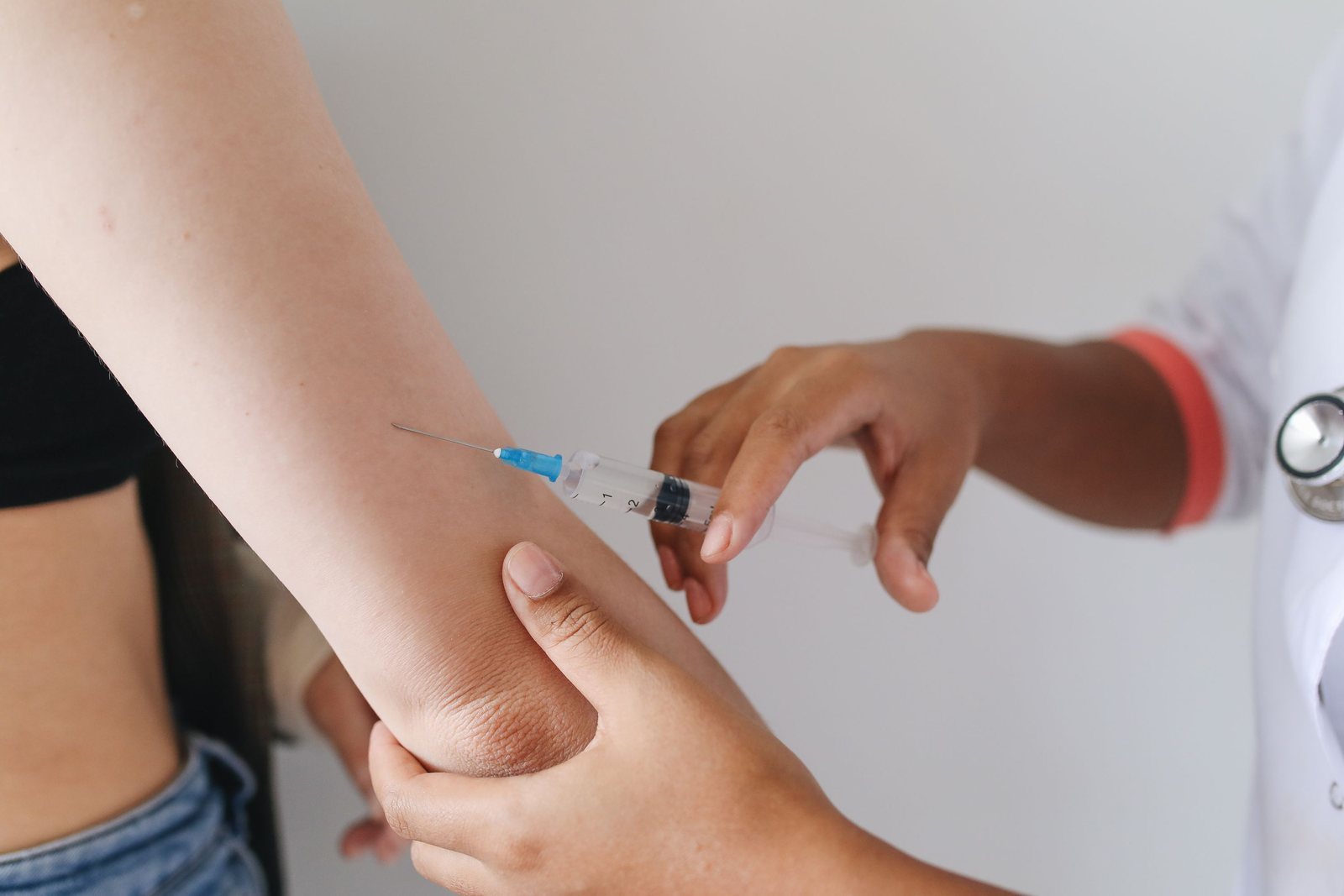
Vaccination in pregnancy protects two people. Antibodies cross the placenta and give the baby protection in its first months, before it is old enough to be vaccinated itself.
Everyday precautions worth taking

- Wash hands after diaper changes, and after contact with young children’s saliva
- Avoid sharing cups, cutlery or food with toddlers
- Wear gloves for gardening and for handling soil
- Avoid changing cat litter where possible, or wear gloves and wash afterwards
- Avoid contact with anyone who has chickenpox, measles or slapped cheek syndrome if you are not immune
- Tell your maternity team promptly about any fever, rash or unusual illness
The advice about young children surprises people. Cytomegalovirus is common, usually harmless in adults, and spread through the saliva and urine of toddlers, which is why hand hygiene around them matters more in pregnancy than at other times.
Infections that are screened for routinely
Antenatal care includes screening for several infections, not because they are common but because identifying them changes what can be done.
- HIV, where treatment in pregnancy dramatically reduces transmission to the baby
- Hepatitis B, where the newborn can be protected at birth
- Syphilis, which is treatable and carries serious consequences untreated
- Rubella immunity, which guides vaccination after delivery
- Urine screening for infection, including infection without symptoms
These are offered as routine rather than because anything is suspected. If you would prefer to discuss any of them, or have questions about HIV prevention specifically, our article on how PrEP works covers the preventive side.
Food, and why the rules exist
Food advice in pregnancy is not arbitrary caution. It targets two specific organisms that behave unusually badly in pregnancy: listeria and toxoplasma.

- Avoid unpasteurised milk and cheeses made from it
- Avoid pre-prepared deli salads and chilled ready-to-eat meats unless heated through
- Cook meat thoroughly, and wash fruit, vegetables and salad
- Avoid raw or undercooked eggs unless they are from a recognized safe scheme
- Observe fish advice regarding mercury and raw fish
- Keep the fridge cold and observe use-by dates carefully
Listeria is rare, but it can cross the placenta, and it grows at refrigerator temperatures, which is why chilled ready-to-eat foods feature so heavily in the guidance.
Medicines and infection in pregnancy
The instinct to avoid all medicines in pregnancy is understandable and sometimes harmful. Untreated infection carries its own risks, and for several common infections the risk of not treating clearly exceeds the risk of treating.
Many antibiotics are well established in pregnancy; some are avoided. That is a prescribing decision rather than one to make yourself, and it is a reason to be seen rather than to wait an infection out.
Equally, do not stop a prescribed medicine on discovering a pregnancy without speaking to whoever prescribed it. Abrupt stopping carries its own risks, and the review should happen with someone who knows the whole picture.
Travel during pregnancy
Travel is often perfectly reasonable, but it needs more planning than usual, and the planning has to start earlier.
Some destinations carry risks that change the calculation entirely: malaria is more dangerous in pregnancy, and some regions carry infections with specific risks to a developing baby. Some prophylaxis and some vaccines are unsuitable.
If travel is planned, book a pre-travel consultation well ahead, and mention the pregnancy at the point of booking rather than on arrival. Our article on how far in advance to plan explains why the lead time matters.
None of this is a reason for anxiety. The great majority of pregnancies pass without any infection of consequence, and the precautions above are straightforward once they become habit.
When to call rather than wait

- Any fever, particularly above 38°C
- Burning on passing urine, or pain in the back or side
- Any new rash, or contact with someone who has chickenpox or measles
- Flu-like illness, which should be assessed early rather than waited out
- Reduced fetal movements, at any time
- Abdominal pain, or any fluid loss
Tell any clinician who assesses you that you are pregnant, and how many weeks. It changes which investigations and which medicines are appropriate, and it is not always obvious.
Frequently asked questions
Is the flu vaccine safe in pregnancy?
The inactivated influenza vaccine is recommended in pregnancy. Pregnancy raises the risk of severe influenza, and vaccination also passes protection to the baby for its first months.
Which vaccines are avoided in pregnancy?
Live vaccines such as MMR and varicella are generally avoided and given before or after pregnancy. Live travel vaccines require individual assessment weighing the destination risk.
Why is a urine test done at every appointment?
Urinary infections are more common in pregnancy and can be present without symptoms. Untreated they can progress to a kidney infection and carry risks for the pregnancy, so they are screened for and treated.
Do I really need to avoid cat litter?
The concern is toxoplasma, which can be present in cat feces. If someone else can change the litter, that is simplest; if not, wear gloves and wash hands thoroughly afterwards.
Can I travel abroad while pregnant?
Often yes, but it needs earlier planning. Some destinations carry infection risks that matter more in pregnancy, and some vaccines and malaria medicines are unsuitable. Arrange a pre-travel consultation well in advance.
Decisions in pregnancy belong with your own obstetric team, who know your history. For infection-specific questions, more about the specialty is on the infectious disease physician page, and the contact page explains how to reach us.
Sources and further reading: American College of Obstetricians and Gynecologists — The flu vaccine and pregnancy.
This article is general health information, not medical advice, and it cannot account for your own history or medications. Discuss your situation with a qualified clinician before acting on anything you read here.