

Syphilis was close to eliminated in the United States twenty five years ago. It is now rising steeply, including among people who would never consider themselves at risk.
It is also entirely curable, usually with a single injection, and detected by an ordinary blood test. The gap between how treatable it is and how often it is missed is the whole problem.

Why it goes undetected
The first sign of syphilis is a sore called a chancre. It has three properties that together make it very easy to miss.
- It is painless, so nothing prompts you to look
- It is often hidden — inside the vagina, the anus, the mouth, or under foreskin — where it is never seen
- It heals by itself in three to six weeks whether or not it is treated
That last point is the dangerous one. The sore going away feels like the problem resolving. It is not. The infection continues, and the next stage may not appear for weeks or months.

The stages, and what they look like
| Stage | When | What is seen |
|---|---|---|
| Primary | 3 weeks after exposure, roughly | A single painless sore, often unnoticed |
| Secondary | Weeks to months later | Rash, often on the palms and soles; fever; swollen glands; hair loss |
| Latent | After symptoms settle | Nothing at all; detectable only by blood test |
| Late | Years later, in a minority | Damage to the heart, brain, nerves or eyes |
| Neurological or eye involvement | Any stage | Headache, vision or hearing change, confusion |
The rash of secondary syphilis is the one detail worth remembering, because it is unusual. Rashes on the palms of the hands and soles of the feet are uncommon in general, and this is one of the few conditions that regularly causes them.
New vision changes, hearing changes, severe headache or confusion in someone with syphilis are urgent, not routine. Involvement of the eyes or nervous system can happen at any stage, including early, and is treated differently.
Who should be tested
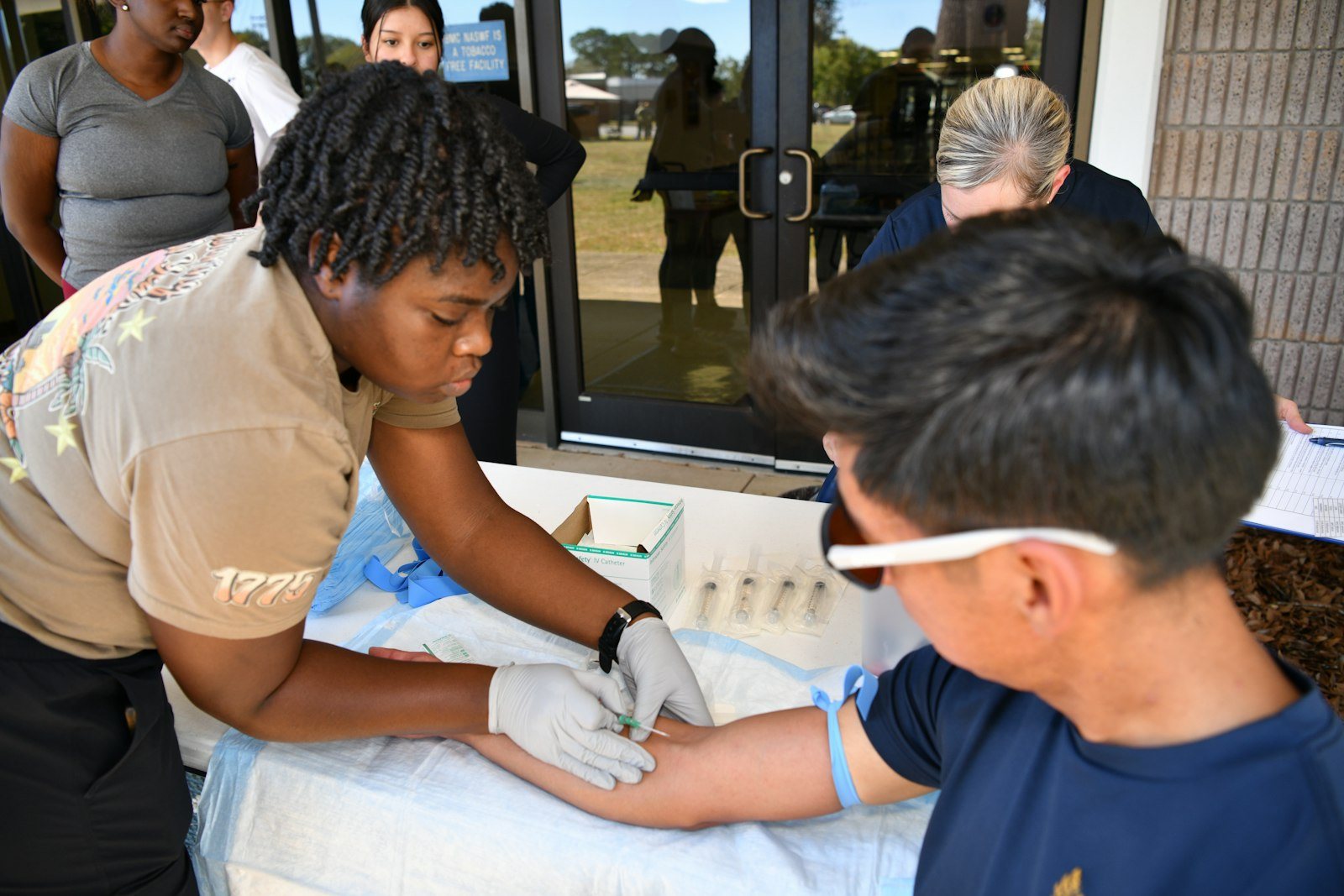
Because the latent stage produces no symptoms whatever, testing is the only route to finding it. It is a blood test, it is inexpensive, and it is routinely offered alongside other screening.
- Anyone with a new partner, or more than one partner
- Everyone who is pregnant, at the first visit — and again later where risk exists
- Anyone diagnosed with another sexually transmitted infection
- Anyone taking PrEP for HIV prevention, as part of routine review
- Anyone with an unexplained rash involving the palms or soles
- Anyone whose partner has been diagnosed
Why there are two blood tests, not one
Syphilis testing routinely involves two different blood tests, and understanding why prevents a good deal of confusion when results are explained.
One type detects antibodies to the organism itself. Once positive, it generally stays positive for life, treated or not. It answers the question of whether you have ever had syphilis, and it cannot tell you whether the infection is active now.
The other type measures a marker that rises with active infection and falls after successful treatment. It is reported as a number, and that number is what follow-up tracks. A falling result confirms treatment worked; a rising one suggests reinfection or treatment failure.
- A permanently positive test does not mean you are still infected
- The numerical result is the one that matters after treatment
- Keep a record of your result and its number, because future testing is interpreted against it
- A previously treated infection makes later results harder to read without that history, which is why the record is worth holding onto
If you have been treated for syphilis before, say so whenever you are tested again. One of the tests will stay positive for life, and without that history a result can look like a new infection when it is not.
Testing in pregnancy is the urgent case
Congenital syphilis, where the infection passes to a baby during pregnancy, has risen faster than syphilis overall. It can cause stillbirth, prematurity and lasting harm.
Almost all of it is preventable. Testing at the first prenatal visit, repeated later where there is ongoing risk, catches it in time for treatment that protects the baby. Our article on infections and vaccines in pregnancy covers what else is screened for.
Treatment is simpler than people expect
Syphilis has never developed resistance to penicillin. Early infection is treated with one injection of a long-acting form; later or latent infection needs three weekly injections. Treatment stops the infection and prevents further damage.
Damage already done is not reversed, which is the argument for testing rather than waiting for symptoms.
If you carry a penicillin allergy label, raise it early. Penicillin is so clearly the best treatment here, and the only one recommended in pregnancy, that formal assessment of the label is worthwhile rather than simply accepting a second choice. Our article on whether a penicillin allergy label is accurate explains why most turn out to be wrong.
Some people develop fever, chills and aching within a day of the first dose. This is a recognized reaction to the infection being cleared, not an allergy to the drug, and it settles. Knowing about it beforehand prevents a great deal of alarm.
After treatment
- Follow-up blood tests confirm the infection is responding; they are part of the cure
- Avoid sex until treatment is complete and you have been told it is safe
- Partners need testing and usually treatment, even if they feel entirely well
- Being treated once does not protect you; reinfection is common
- Testing for other infections is offered at the same time, because they travel together
Frequently asked questions
I had a sore that healed on its own. Am I fine?
Not necessarily, and this is the most common reason syphilis is missed. The primary sore heals whether or not it is treated, while the infection continues. A blood test is the only way to know.
Can syphilis be caught without intercourse?
Yes. It spreads through direct contact with a sore, which includes oral and anal sex and sometimes prolonged skin contact. It is not spread by toilet seats, swimming pools, cutlery or shared clothing.
How soon after exposure is a test reliable?
Blood tests can take a few weeks after exposure to become positive. If you test very early and the result is negative but there was a genuine exposure, a repeat test is usually advised rather than treating the first result as final.
Is one injection really enough?
For early syphilis, yes. Later or latent infection needs three weekly injections. The follow-up blood tests are what confirm it worked, which is why those appointments matter as much as the injection itself.
Do I have to tell my partners?
They need to know, because they may be infected without symptoms and can be reinfected by you or reinfect you. Health departments can notify partners anonymously if you prefer, and that service exists precisely because the conversation is difficult.
If you are arranging testing or have had a positive result, our article on when to see an infectious disease specialist explains what the appointment covers.
Sources and further reading: American Sexual Health Association — Understanding syphilis.
This article is general health information, not medical advice, and it cannot account for your own history or medications. Discuss your situation with a qualified clinician before acting on anything you read here.