

It comes on fast. You were fine at lunch and by evening you cannot keep water down. The first question everyone asks is what they ate.
Often that is the wrong question. Sudden vomiting and diarrhea are far more often a virus passed from another person than anything wrong with a meal, and the difference matters, because one of them spreads through your household and the other does not.
The timing tells you more than the meal does
People reliably blame the last thing they ate. That instinct is usually wrong, because almost nothing causes illness within an hour or two, and the meal that made you sick is more often the one from the day before.
| Onset after eating | Usually | Typical picture |
|---|---|---|
| 1 to 6 hours | A toxin already present in the food | Violent vomiting, little fever, over within a day |
| 12 to 48 hours | Norovirus, usually from a person not the food | Vomiting and watery diarrhea, aching, low fever |
| 1 to 3 days | Bacterial infection such as salmonella | Diarrhea, cramps, fever, sometimes blood |
| 3 to 7 days | Campylobacter, or other bacteria | Cramping diarrhea, fever, often after poultry |
| Over a week | Parasites, or something unrelated | Prolonged loose stool, weight loss |
The middle row is the common one. Norovirus is the most frequent cause of sudden vomiting and diarrhea in adults, and while it can be carried on food, it is usually caught from another person or a surface they touched.
None of these intervals is exact, and they overlap. They are a guide to which explanation is more likely, not a way to identify an organism, and the only way to be certain is testing where testing is warranted.
Why norovirus spreads so efficiently
Norovirus is unusually good at what it does, and understanding why explains the precautions that actually work.
- It takes very few virus particles to infect someone
- It survives on surfaces for days
- It is shed before symptoms start and for at least two days after they stop
- Alcohol hand gel works poorly against it, unlike most other things
- Vomiting spreads it through the air onto nearby surfaces
- Having had it gives only short-lived protection, so you can catch it again
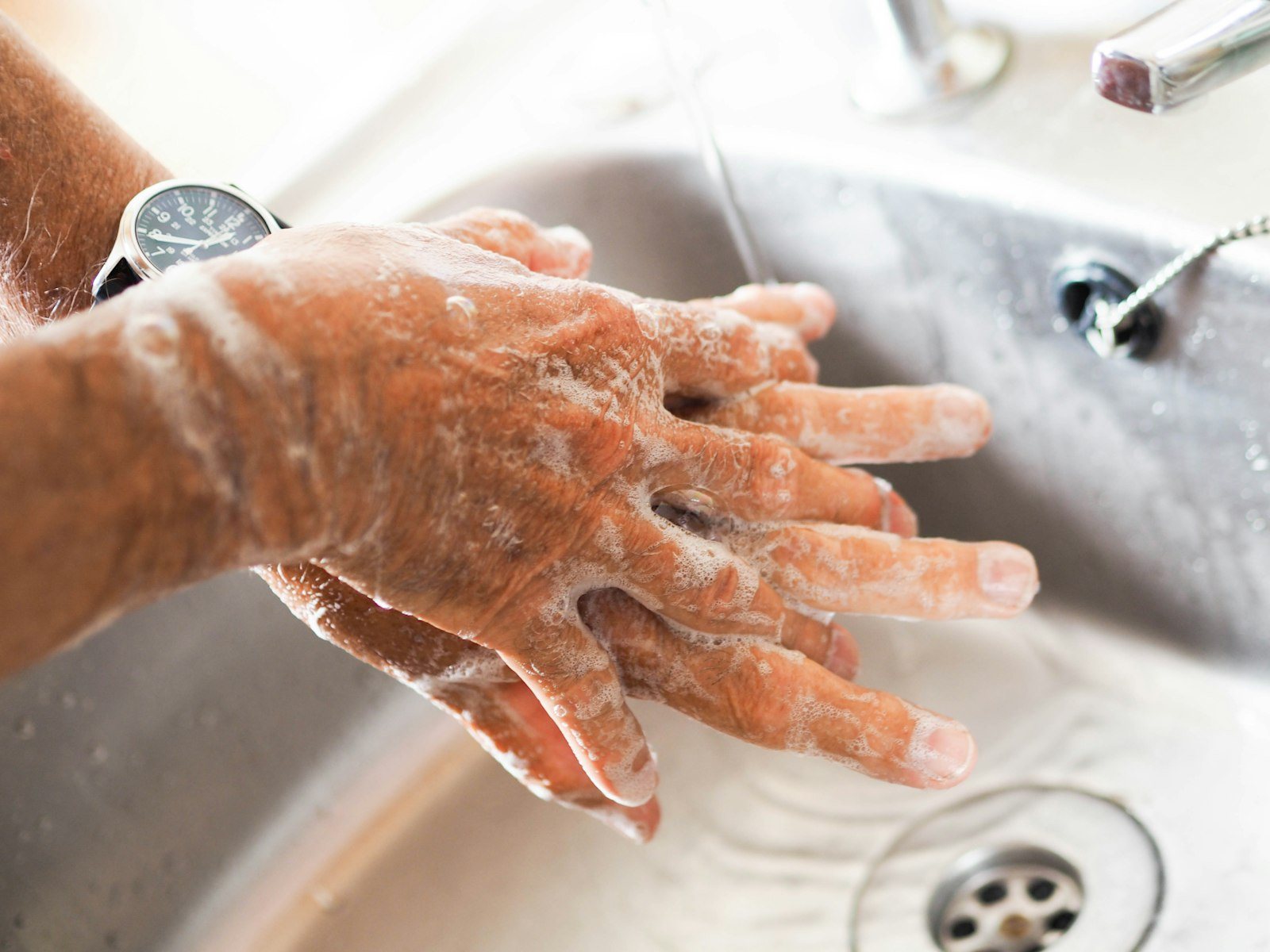
Hand sanitizer is not a substitute here. Wash with soap and running water, particularly after using the bathroom and before handling food. This is the one common infection where the gel by the door is close to useless.
For the household, that means cleaning bathroom surfaces and door handles with a bleach-based product rather than a general spray, washing soiled laundry separately on a hot cycle, and keeping the unwell person away from food preparation until two days after they are better.
When the food really was the problem
Genuine food-borne infection tends to declare itself a day or more after the meal, often with more fever and more cramping. Poultry, undercooked ground meat, unpasteurized milk and cheese, raw shellfish, and pre-cut fruit and salad account for a large share.
If several people who shared a meal are ill and others who did not are well, the food is the likelier explanation. If the illness is moving through a household or an office over several days, it is almost certainly being passed person to person.
What to do while it runs its course
Most of these illnesses resolve on their own in one to three days and need no treatment. Dehydration is the actual risk, and it is the thing to manage.
- Sip small amounts often rather than drinking a glass at once
- Use oral rehydration solution if diarrhea is heavy, or if you are older or frail
- Return to bland food as soon as you can face it; do not starve yourself
- Skip alcohol and caffeine while symptoms last
- Avoid anti-diarrheal medication if you have fever or blood in the stool
- Stay off work, and away from cooking for others, for two days after symptoms stop
Antibiotics do not help viral illness and are usually unnecessary even for bacterial food poisoning, where they can prolong carriage of the organism. Our article on antibiotic resistance covers why that matters, and taking a course also raises the risk of C. difficile afterwards.
The four things that prevent most of it
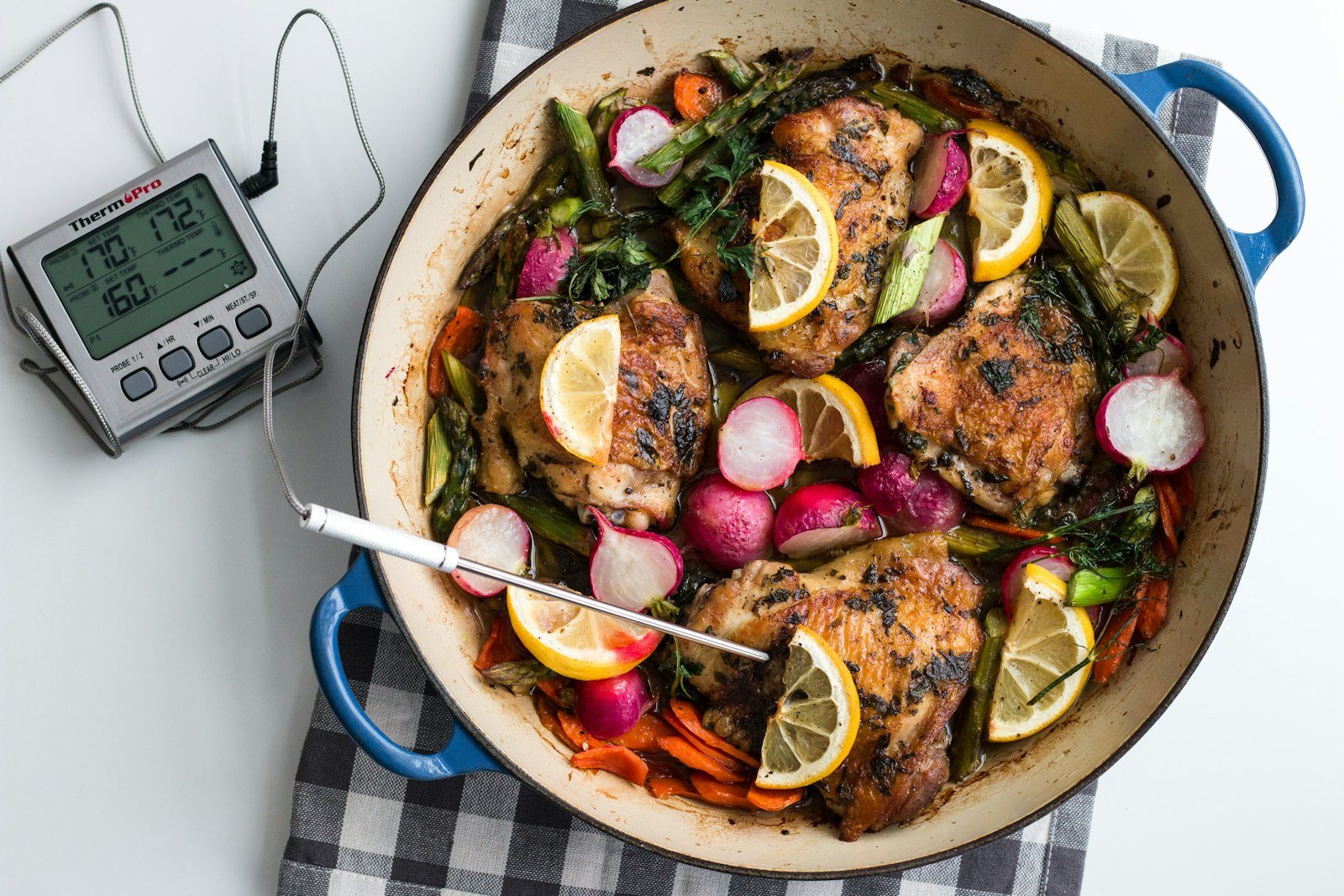
Food safety advice tends to arrive as a long list nobody remembers. In practice most household food-borne illness comes down to four habits.
- Separate. Raw meat, poultry and seafood are kept away from anything eaten raw. Cross-contamination in the kitchen causes more illness than undercooking
- Cook. Use a thermometer rather than judging by color. Ground meat and poultry are the two where this genuinely matters
- Chill. Refrigerate leftovers within two hours, or one hour in hot weather. Bacteria multiply fastest between refrigerator and cooking temperature
- Clean. Wash hands, boards and counters between tasks, and replace sponges and cloths often, since they hold more bacteria than anything else in a kitchen
Some foods carry enough risk that certain people are advised to avoid them entirely: unpasteurized milk and soft cheese, raw or undercooked eggs, raw shellfish, raw sprouts, and deli meats that have not been reheated. That applies particularly during pregnancy, after sixty-five, and to anyone with suppressed immunity, including during cancer treatment.
When it stops being self-limiting
- Signs of dehydration: passing little urine, dizziness on standing, a dry mouth
- Blood in the stool, or black stool
- Fever above 102 degrees Fahrenheit, or fever lasting beyond a couple of days
- Vomiting that prevents any fluid staying down for more than a few hours
- Diarrhea lasting more than a week
- Severe abdominal pain rather than cramping that eases after passing stool
- Recent travel abroad, recent antibiotics, pregnancy, or a suppressed immune system
Older adults dehydrate faster and show it differently, often as confusion or a fall rather than thirst. Our article on infections in older adults covers why the usual warning signs can be absent.
Frequently asked questions
How do I know if it was the food or a bug going around?
Timing and pattern. Illness within a few hours of eating points to a toxin in the food; twelve to forty eight hours points to norovirus, usually caught from a person. If others who shared the meal are also ill, the food is likelier.
How long am I contagious?
With norovirus, from before symptoms begin until at least two days after they stop, and sometimes longer. That is why the advice to stay away from cooking and work extends beyond the point at which you feel better.
Should I take something to stop the diarrhea?
Usually not at first. Diarrhea clears the organism, and anti-diarrheal medication should be avoided entirely if you have a fever or blood in the stool. For simple watery diarrhea without those features it can be reasonable, but ask.
Do I need a stool test?
Not for a short, uncomplicated illness that settles on its own. Testing is worthwhile for blood in the stool, prolonged symptoms, recent travel, recent antibiotics, or a suppressed immune system, because those change what is treated.
Can I catch norovirus twice in one season?
Yes. Immunity is short-lived and there are several strains circulating, so a second episode within the same year is entirely possible.
Sources and further reading: U.S. Food and Drug Administration — What you need to know about foodborne illnesses.
This article is general health information, not medical advice, and it cannot account for your own history or medications. Discuss your situation with a qualified clinician before acting on anything you read here.