
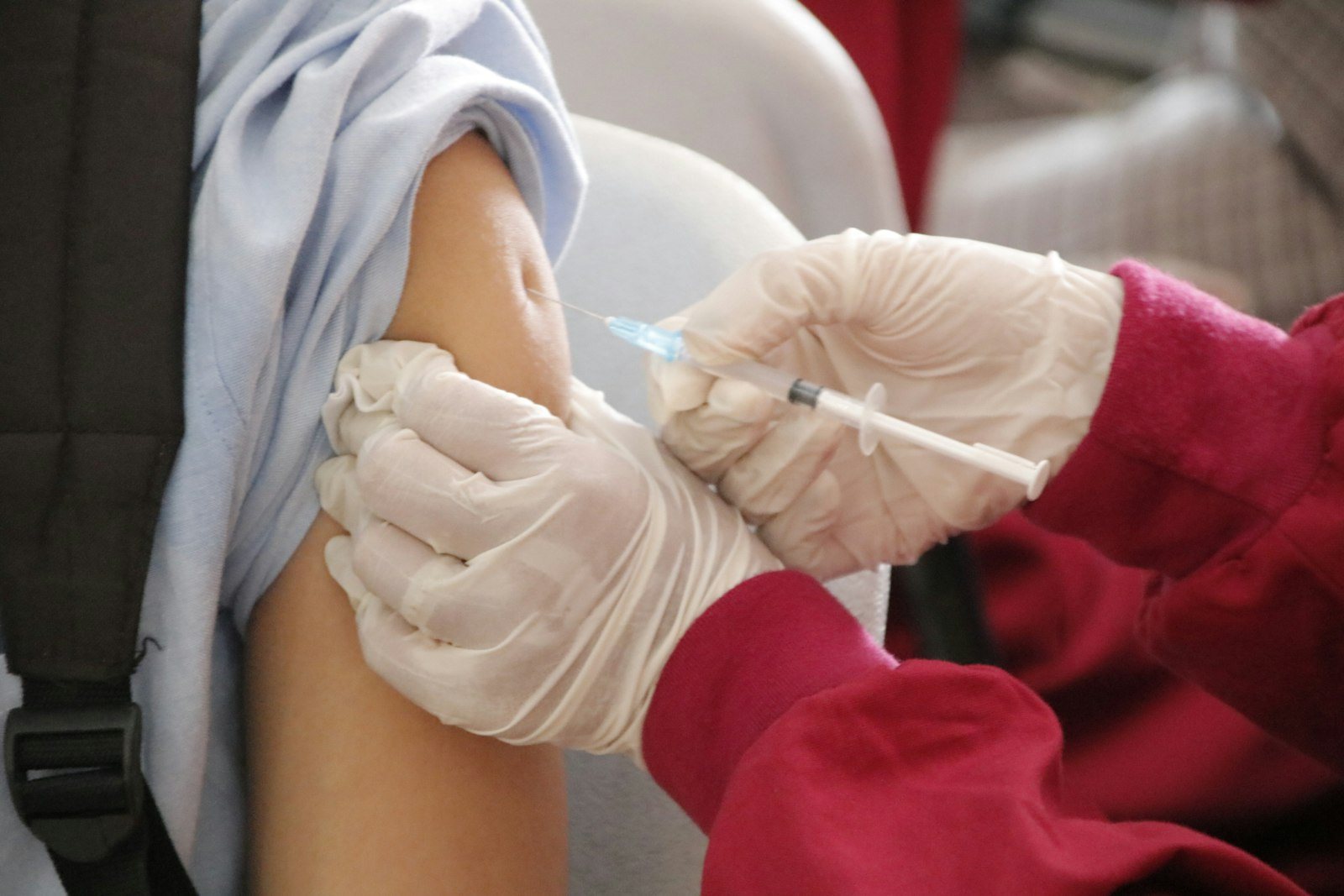
Treatment that suppresses the immune system changes the vaccine conversation in two directions at once. Some vaccines become unsafe. The rest become more important than they were before, because the infections they prevent hit harder.
Both halves get lost. People are told “no live vaccines” and hear “no vaccines”, which is close to the opposite of the advice.
Live and inactivated, and why the difference matters
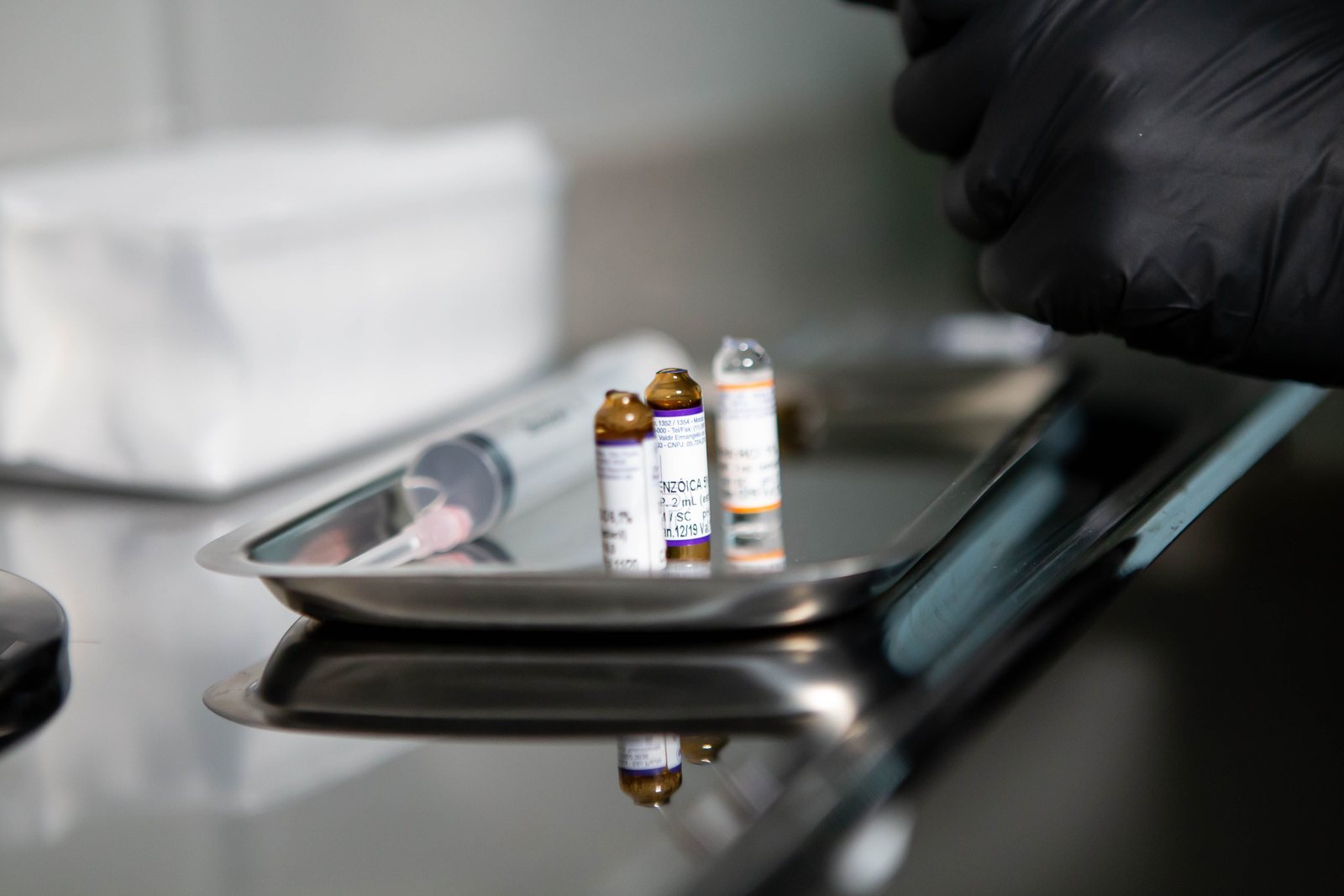
A live vaccine contains a weakened form of the organism. It provokes a strong, long-lasting response precisely because the body has something replicating to react to. In someone whose immune system is working, that weakened organism is controlled easily. In someone whose immune system is suppressed, it may not be.
Everything else — the great majority of adult vaccines — contains no living organism at all. It cannot cause the infection it protects against, whatever your immune status. The question with these is not safety but how well they work.
| Live vaccines | Inactivated and other non-live vaccines | |
|---|---|---|
| What is in them | A weakened living organism | Killed organism, a protein, or genetic instructions |
| Examples | MMR, varicella, yellow fever, live nasal flu | Flu shot, shingles, pneumococcal, hepatitis B, tetanus, COVID |
| If you are immunosuppressed | Generally avoided | Safe; recommended, often more strongly than usual |
| The practical problem | Timing around when treatment starts | The response may be weaker, not absent |
| If given at the wrong time | Can cause illness from the vaccine strain | May simply work less well; can be repeated or boosted |
The fourth row is where most of the real planning sits. A weaker response is not no response, and it is usually managed by choosing the timing, using a higher-dose formulation where one exists, or checking antibody levels afterwards.
Timing is the thing worth planning
If immune-suppressing treatment has not started yet, this is the moment that matters. Live vaccines can generally be given beforehand, with a gap before treatment begins, and non-live vaccines given in advance tend to produce a better response.
- Ideally, live vaccines at least four weeks before treatment starts
- Non-live vaccines ideally a couple of weeks before, though later is still worthwhile
- Some treatments are timed around the vaccine rather than the reverse
- A few medications blunt the response markedly and may be briefly paused, which is a decision for the prescribing specialist and not something to do independently
- After treatment ends, there is usually a waiting period before live vaccines can resume, and it varies a great deal by drug
Never pause or delay immune-suppressing treatment to fit a vaccine in without the specialist who prescribed it saying so. The disease being treated is also a risk, and that trade-off is theirs to weigh with you.
Which ones matter more than they did
The vaccines that prevent the infections you are now more vulnerable to move up the list, and several are given differently in this situation.
- Influenza, annually, and the injected form rather than the live nasal spray; see flu antivirals for what happens if you catch it
- Pneumococcal vaccines, which prevent a common cause of pneumonia
- Shingles, where the non-live vaccine has made this possible for many people who previously could not have it; see shingles and its vaccine
- COVID-19, on whatever schedule currently applies to immunocompromised adults
- Hepatitis B, often at a higher dose or with extra doses; see what a positive hepatitis B test means
- RSV, which is now recommended for many at-risk adults; see RSV in adults
Our article on which adult vaccines you need covers the standard schedule these are built on.
The live vaccines to be careful with
- MMR (measles, mumps and rubella)
- Varicella, the chickenpox vaccine
- The live nasal influenza spray, where the injected vaccine is used instead
- Yellow fever, which matters for travel; see travel vaccines and how far in advance to plan
- Oral typhoid, where an injected alternative exists
- BCG
Travel is where this becomes concrete. Yellow fever vaccination is required for entry to some countries, and if it cannot be given safely, that is a conversation to have months before booking rather than weeks. A waiver letter is sometimes possible. Our article on fever after international travel covers what happens if something is caught anyway.
Household members, and why they can have live vaccines
People often assume that if they cannot have a live vaccine, nobody they live with should either. With one narrow exception this is backwards, and it leaves households less protected than they should be.
Children and other household members should be fully vaccinated, including with live vaccines. A well-vaccinated household is a barrier between you and the infection. The usual caveats are practical rather than prohibitive: after the live nasal flu spray or a rotavirus dose, ordinary hygiene precautions are advised for a short period, and someone who develops a rash after varicella vaccination should avoid close contact until it resolves.
What to ask, and when
- Ask for a vaccine review at the point immune-suppressing treatment is first discussed, not after it starts
- Bring your vaccination records; if you cannot find them, our adult vaccines article covers how to trace them
- Ask specifically which of your vaccines are live and what that means for timing
- Ask whether a higher-dose or additional-dose schedule applies to you
- Ask whether antibody levels will be checked afterwards, as they are for hepatitis B
- Ask what to do if you are exposed to chickenpox or measles, since preventive treatment after exposure exists and is time-critical
That last point is the one most worth writing down now. If you are immunosuppressed and exposed to measles or chickenpox, there is something that can be given, and it works best given quickly.
Infections during immune suppression are a large part of what this practice does, including infections during cancer treatment. You can reach us through the contact page.
Frequently asked questions
Does immunosuppression mean I cannot have any vaccines?
No, and this is the most common misunderstanding. Live vaccines are generally avoided. Non-live vaccines are safe and usually recommended more strongly than for other adults, because the infections they prevent are more dangerous for you.
Will vaccines still work if my immune system is suppressed?
Usually, though the response may be weaker. That is managed by timing, higher-dose or additional doses where they exist, and sometimes by checking antibody levels afterwards. A weaker response is still substantial protection.
Can my children have their normal vaccines?
Yes, including live ones, and they should. A vaccinated household protects you. Brief sensible precautions apply after the live nasal flu spray and rotavirus, and if a rash develops after varicella vaccination.
I need yellow fever vaccine for a trip. What now?
Raise it early, ideally months ahead. Depending on your treatment it may be possible, may need to be timed carefully, or may not be advisable, in which case a waiver letter and a discussion about the itinerary are the alternatives.
Should I stop my medication to get vaccinated?
Not on your own. Some regimens are adjusted around vaccination and some are not, and the disease being treated carries its own risk. This is a decision for the specialist who prescribes it.
Sources and further reading: American College of Rheumatology — Vaccination recommendations for patients with rheumatic and musculoskeletal diseases.
This article is general health information, not medical advice, and it cannot account for your own history or medications. Discuss your situation with a qualified clinician before acting on anything you read here.