
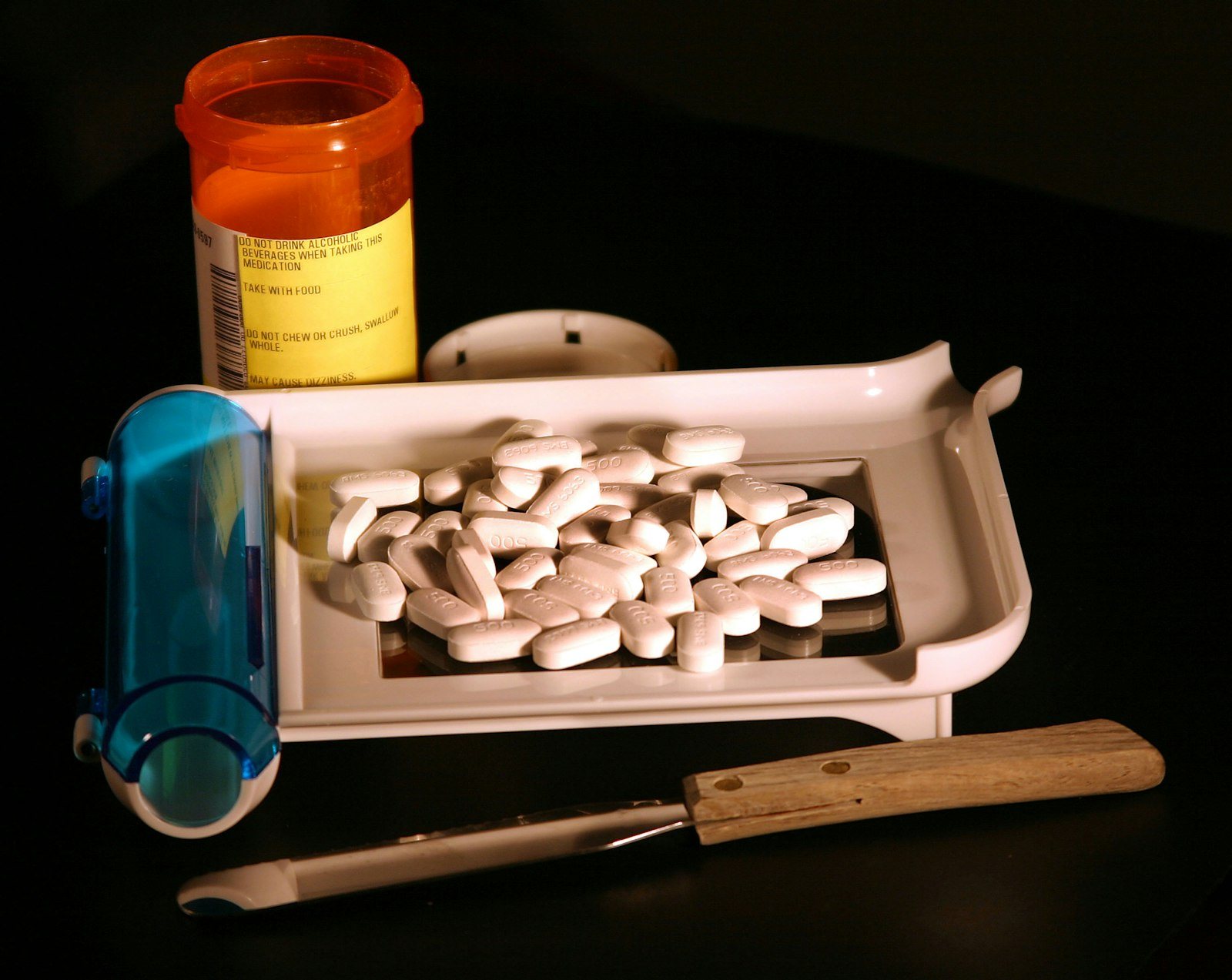
Two people leave the same clinic on the same afternoon. One has five days of tablets. The other has six weeks of intravenous antibiotics and a line in their arm. Both have a bacterial infection, and both prescriptions are correct.
Course length is not a measure of how ill you are. It follows from where the infection is, and specifically from how easily antibiotics reach it.
What actually sets the length
An antibiotic has to reach the bacteria at a high enough concentration for long enough to finish them off. Blood, urine and skin are easy to reach. Bone, heart valves, abscess cavities and anything with an implant in it are not.
- Blood supply. Well-perfused tissue gets a high drug level quickly. Bone and old scar tissue do not.
- Whether there is a collection. Antibiotics barely penetrate pus, which is why abscesses are drained rather than simply treated.
- Whether there is hardware. Bacteria form a biofilm on artificial surfaces that antibiotics struggle to cross; see infection after a joint replacement
- Which organism it is. Some grow slowly and are killed slowly.
- Your own immune system. Where it is suppressed, the drug does more of the work and often for longer; see vaccines when your immune system is suppressed
| Infection | Typical length | What drives it |
|---|---|---|
| Uncomplicated urinary infection | Three to five days | The drug concentrates in urine at very high levels |
| Cellulitis | Five to seven days | Skin is well supplied with blood; longer if it is slow to settle |
| Community-acquired pneumonia | Five days for most | Shortened substantially in recent years by trial evidence |
| Bone infection | Six weeks, often intravenous at first | Bone is poorly penetrated and heals slowly |
| Heart valve infection | Four to six weeks, intravenous | Vegetations on a valve have almost no blood supply |
| Infection on an implant | Six weeks, sometimes months after | Biofilm on hardware resists antibiotics at any dose |
The pattern is consistent: the harder a site is to reach, the longer the course. Nothing in that table is about the severity of how you feel.
Shorter has become the rule for common infections
For a long time, course lengths were round numbers inherited from custom rather than evidence — seven days, ten days, fourteen. A large body of trials has since compared shorter courses against longer ones for common infections and found them equivalent.
So a five-day course for pneumonia is not your clinician being sparing. It is the current standard, and the longer course it replaced was never shown to be better. Shorter courses also mean fewer side effects, less C. difficile diarrhea and less pressure toward antibiotic resistance.
If you have been prescribed a shorter course than you expected, that is usually evidence catching up with habit. If you have been prescribed a much longer one, there is a reason rooted in where the infection is — and it is worth asking what that reason is.
So should you still finish the course?

This is where public messaging has genuinely shifted, and the shift is easy to misread. The old instruction — always finish every tablet — was built on a belief that stopping early breeds resistance. That specific claim turned out to be weaker than it sounded.
What replaced it is not “stop when you feel better.” It is that the right length should be prescribed in the first place, and then taken as prescribed. You are not in a position to judge from home whether a deep infection has cleared, because feeling better happens well before the bacteria are gone.
- Take the course you were given, to the end
- If side effects are the problem, call rather than simply stopping — there are usually alternatives
- Do not save leftovers for next time, and do not take someone else’s
- Do not ask for a longer course “to be safe”; longer is not safer
- If you are not improving by 48 to 72 hours, that is a reason to be reassessed rather than to continue hopefully
When the course runs into weeks

Deep infections — bone, joints, heart valves, implants, the spine — are the ones that run for weeks. Our articles on bone and joint infections and heart valve infection cover two of them, and when a foot ulcer reaches bone covers a third.
Much of that treatment is intravenous, and most of it happens outside hospital. Outpatient IV antibiotics explains how that works week to week, and what an infusion appointment involves covers the visit itself.
Long courses are also monitored differently. Blood tests track inflammation, and imaging is often repeated, because “I feel fine” is not sufficient evidence that a bone infection has resolved.
Why the choice of drug matters as much as the length
A shorter course of the right antibiotic beats a longer course of the wrong one. That is what a culture and sensitivity result is for, and why the drug is sometimes changed a few days in.
A recorded penicillin allergy frequently forces a broader, less effective second choice, which is one of the strongest arguments for getting that label checked rather than carrying it for life.
Questions worth asking
- How long is this course, and what decided that length?
- What should improvement look like, and by when?
- What should I do if I am not better in three days?
- Are there side effects that mean I should call rather than push on?
- Does anything else need doing — draining, removing, or imaging?
- Will this need to be reviewed once the culture comes back?
Choosing the drug and the duration for a deep infection is a large part of what an infectious disease practice does. Our article on when to see an infectious disease specialist explains what that adds, and you can reach us through the contact page.
Frequently asked questions
Should I finish the course or stop when I feel better?
Finish the course you were given. The messaging that changed was about how long courses should be prescribed, not about patients shortening them at home. Feeling better happens well before a deep infection is cleared.
Why did I only get five days when I used to get ten?
Because trials have shown shorter courses work as well for many common infections. The ten-day course was largely inherited custom. Shorter also means fewer side effects and less resistance pressure.
Why does my infection need six weeks of treatment?
Almost certainly because of where it is. Bone, heart valves and anything involving an implant are poorly reached by antibiotics, so the drug has to be given for far longer to finish the job.
Can I stop early if the side effects are bad?
Call rather than stopping. Side effects are common and there are usually alternatives. Stopping without replacing the treatment leaves the infection partly treated.
Is a longer course safer?
No. Longer courses carry more side effects, more C. difficile risk and more resistance, without better cure rates in the infections that have been studied. Longer is only better where the site demands it.
Sources and further reading: American College of Physicians — Best practice advice on short-course antibiotics for common infections.
This article is general health information, not medical advice, and it cannot account for your own history or medications. Discuss your situation with a qualified clinician before acting on anything you read here.