

A tooth infection is a dental problem right up until the moment it is not. The transition is uncommon, it is fast when it happens, and it is one of the few infections where the anatomy genuinely explains the danger.
The spaces around the jaw connect to the neck, and the neck connects to the chest. An infection that finds those planes can travel a long way in a day.
Why a tooth can do this at all
An abscess at the root of a tooth is under pressure in a rigid space. It takes the path of least resistance — usually outward, forming a visible gum swelling that drains and settles. Occasionally it goes the other way, into the soft tissue planes of the floor of the mouth, the cheek, or the neck.
Those planes are continuous. There is no barrier between the floor of the mouth and the tissues of the neck, which is why a lower molar infection is watched more carefully than an upper one.
The signs that it is no longer local

| Usually a dental problem | Needs urgent assessment | |
|---|---|---|
| Pain | Localized to one tooth | Spreading across the jaw or into the neck |
| Swelling | Small, at the gum | Face, under the jaw, or in the neck |
| Opening the mouth | Normal | Restricted — a significant warning sign |
| Swallowing | Normal | Painful, or difficult |
| Voice | Normal | Muffled or altered |
| Temperature | Normal | Fever, chills, feeling generally unwell |
| Breathing | Normal | Any difficulty — this is an emergency |
Difficulty breathing, difficulty swallowing, a muffled voice, an inability to open the mouth, or swelling spreading under the jaw or down the neck are emergency department symptoms, not dental appointment symptoms. Go the same hour, not the same week.
Swelling that crosses the midline under the jaw, or that pushes the tongue upward, is the specific picture clinicians are trained to fear, because it can compromise the airway quickly.
What happens at the dentist
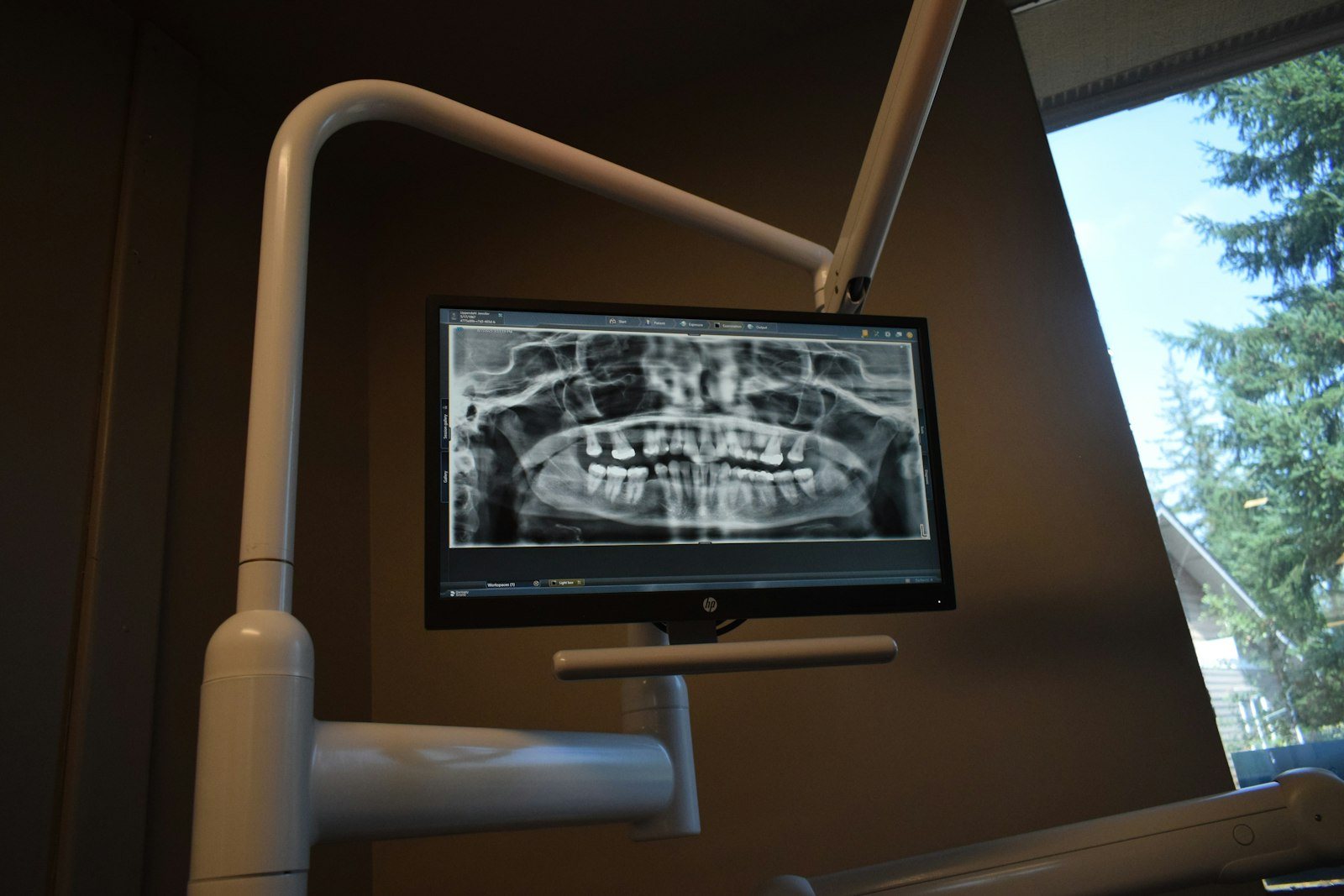
For an ordinary dental abscess, the treatment is drainage and dealing with the tooth — root canal treatment or extraction. Antibiotics alone do not cure a dental abscess, for the same reason they do not cure any undrained collection: the drug does not reach the inside of it.
This surprises people who have had repeated courses of antibiotics for the same tooth. Each course settles the symptoms, the source remains, and it returns. Our articles on how long antibiotic courses run and antibiotic resistance explain what that repetition costs.

Why it can move so fast
Most infections announce themselves gradually. A spreading dental infection can go from uncomfortable to dangerous inside twelve hours, and the reason is mechanical rather than mysterious.
The tissues under the tongue and jaw are loose and can hold a great deal of swelling before anything is visible from outside. By the time the outside of the neck looks swollen, a lot has already happened internally — and that space is also where the airway sits.
This is why clinicians ask about swallowing and voice rather than about pain. Those questions are about the airway, and they change the urgency completely.
What to do while you are waiting to be seen
None of this treats the infection, and none of it is a substitute for being seen. It makes the wait more tolerable.
- Take over-the-counter painkillers at proper doses and intervals rather than occasionally
- Warm salt water rinses, several times a day
- Sleep propped up rather than flat, which reduces the throbbing
- Cold compress on the outside of the face for comfort
- Do not apply aspirin directly to the gum; it burns the tissue
- Do not try to lance a swelling yourself
- Do not start leftover antibiotics from a previous course; see antibiotics and your other medicines
When it needs more than a dentist
- Facial or neck swelling, which usually means hospital assessment and often intravenous antibiotics; see outpatient IV antibiotics
- Infection that has reached the jaw bone, treated for weeks; see bone and joint infections
- Spread into the chest, which is rare and serious
- Infection seeding a heart valve, which is the reason for the dental questions in our article on endocarditis
- Anyone immunosuppressed or on a biologic, where the threshold for treating early is lower
- Diabetes, which both worsens dental infection and is worsened by it
Who is more likely to run into trouble
Most spreading dental infections happen in people with no particular risk factor, usually after a problem has been ignored for months. A few things make it more likely and lower the threshold for being seen early.
- Diabetes, particularly where control is poor
- Immune suppression of any kind, including a biologic or chemotherapy
- Smoking, which impairs healing in the mouth as everywhere else
- Alcohol dependence and poor nutrition
- Delayed care, for cost or fear, which is the commonest factor of all
- A previous abscess in the same tooth that was treated with antibiotics alone
Cost is worth naming honestly, because it is the reason many dental infections are left. An emergency department visit for a spreading infection is considerably more expensive than the dental treatment that would have prevented it, and the emergency department cannot fix the tooth.
Prevention, which is unglamorous and works
Almost every serious dental infection starts as something small and ignored, often over months. The prevention is the advice everyone already knows.
- Brushing twice daily and cleaning between the teeth
- Regular dental checks, which find the problem while it is still small
- Dealing with a painful tooth rather than managing it with painkillers
- Getting a broken or heavily decayed tooth treated even if it does not hurt
- Telling your dentist about immune-suppressing treatment before it starts
- Not relying on repeated antibiotics to keep a tooth quiet
If a dental infection has spread, or keeps returning despite treatment, that is where an infectious disease opinion is useful alongside the dental care. Our article on when to see an infectious disease specialist covers what that adds, and you can reach us through the contact page.
Frequently asked questions
Can antibiotics alone cure a tooth abscess?
No. They can settle the symptoms temporarily, but the collection has to be drained and the tooth treated. Repeated courses for the same tooth are a sign the source has not been dealt with.
When is a toothache an emergency?
When there is difficulty breathing or swallowing, a muffled voice, inability to open the mouth fully, or swelling spreading under the jaw or down the neck. Those are emergency department symptoms, immediately.
Why does a lower tooth worry dentists more?
Because the tissue planes below the lower jaw connect directly with the neck, and infection tracking that way can affect the airway. Upper tooth infections more often stay in the cheek.
I have facial swelling but no pain. Is that better?
Not necessarily. Pain sometimes eases when the pressure finds a way out, which can mean the infection has moved into tissue rather than resolved. Swelling is the sign to act on.
Does a dental infection put my heart at risk?
For most people, no. It matters more for those with certain heart valve conditions, which is why treating dental infection promptly is more important than routine antibiotics before dental work.
Sources and further reading: National Institute of Dental and Craniofacial Research — Tooth decay.
This article is general health information, not medical advice, and it cannot account for your own history or medications. Discuss your situation with a qualified clinician before acting on anything you read here.